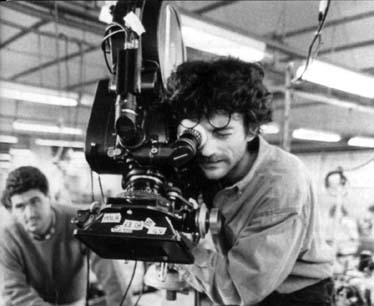
Director Silvio Soldini’s Pane e Tulipani is the first Italian movie I went to see in a theater after I’d started studying Italian and maybe that’s one of the reasons I’m so infatuated with it. It’s one, but not the only and not even the biggest reason that I’ve watched it more times than I can count. When reviewers call Pane e Tulipani boring or superficial I wonder if maybe we didn’t see different movies, because the one I saw was an existential triumph, and it made me want to take a good look at Soldini, the director.
He was born in 1958 and started his education in Italy but moved to New York for a couple of years to attend NYU’s film school. When he returned to Italy he started making movies – and as much as I’d like to understand more about his influences, that’s all I really know. The word paparazzi might have come from Italy but it’s the Americans who have embraced the desire to know every little thing about famous people. I can find out much more than I need to know about Scorsese or Spielberg but the Italian directors stay more easily out of the spotlight. Soldini doesn’t seem to want to be a celebrity – he just wants to make movies.
Obviously, I love Italian movies, and I am a huge fan of the emotional fatalism in many of them. In Carlo Verdone’s comedies, for example, the humor comes from the characters’ frustrations with the inevitability of getting screwed by life. They can’t control it but they make the best of it. But for Soldini, life only sucks if you let it suck and he gives the characters control of their destinies in a pretty awesome way. He creates an allegorical problem and then asks them to solve it. He asks them, “What do you want from life?”, and then waits to see what they decide. It reminds me of Glinda the good witch in The Wizard of Oz reminding Dorothy that the power was always within her. You want to go home? Go home! Nobody’s stopping you. Soldini’s characters that can’t accept it are trapped in the allegory – the ones that can escape to live authentic lives.
I picture it like this: if you locked someone in a room and left them there for a very long time they’d spend some time complaining about it, then they’d cry, get angry, and rail against their predicament. Then maybe they’d philosophize about it, perhaps accept it, and then figure out a way to live relatively happily within the confines of the room.
Soldini creates characters that go straight for the window and jump out of it. They might get injured. They might not have anyplace to go when they are out on the street. But they’re free, and the freedom that he gives his characters is what I think defines Soldini as a director. I think that Soldini is doing some important work and is not taken as seriously as he should be.
I’ve got my eye on him and can’t wait to see what he does next.
(for tomorrow – Silvio Soldini’s “Giorni e Nuvole
 I Love Italian Everything