So many Hollywood actors and actresses have images they don’t seem to like to interfere with when choosing roles and I admire them when they take something that is unflattering. Penelope Cruz is one of the most beautiful women in the world, and her decision to play Italia, the prostitute in Non Ti Muovere was courageous. It’s a hard movie to watch, but this is the kind that Italy should be submitting for Academy Awards. Here’s what Penelope had to say about working with Sergio Castellito on “Non Ti Muovere.“
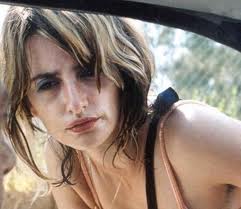
Interview with Penelope Cruz
by Rebecca Murray, About.com Guide
Penelope Cruz stars opposite actor/director Sergio Castellitto in the dramatic film, “Don’t Move,” based on a novel by Castellitto’s wife, Margaret Mazzantini.
“Don’t Move” opens with Timoteo’s (Castellitto) 15 year-old daughter being rushed to the hospital where Timoteo works as a surgeon. With his colleagues fighting to save his daughter’s life, all he can do is wait and hope she survives the operation. Watching over his young daughter, Timoteo flashbacks back to a time before his daughter’s birth, revealing an affair he had with a woman named Italia (Cruz).
In this interview, Penelope Cruz talks about working with Castellitto and getting into her character in “Don’t Move.”
INTERVIEW WITH PENELOPE CRUZ (‘Italia’):
What was the attraction between these two characters in “Don’t Move” that sustained their relationship?
Well, they are two characters who are damaged for different reasons. My character is a girl who had been raped by her father when she was 11 and she’s never recovered from that. She’s even found a way to justify what her father did. That’s not in the movie, but it’s in the book. She says, “No. My father wasn’t really bad.” She says something like, “He was ignorant.” She says that about her father who raped her.
I talked to people about what happens in situations like that, how someone can chose the road to self-destruction because of having gone through so much pain, and that’s what happens to this character. And she has no such thing; she has no hope for a better life. She doesn’t think that she deserves it and that’s what broke my heart about the character. I wanted to do this movie with my heart. And telling the story the way it happens, that’s why some of the scenes are uncomfortable to watch. But I wouldn’t have done the movie if it was pretending to be something else. Those things in life I grab. I’ve met people like that and I love the honesty of the writer, Margaret [Mazzantini] the wife of the director. Certainly they are amazing people and they just wanted to do this movie. And I think that’s why the movie has so much heart and so much love and so much hope, even with a story that is so hard.
Did you meet with people from rape crisis centers?
Yeah. I talked to people in those situations and people in places in the world, young girls who had gone through that even with their own families. The sad thing is that this character never recovers from it. She’s not resisting, but she doesn’t find a way to get over it and feel like she deserves something better in life.
What did you like about working with Sergio Castellitto as a director and as an actor?
I think that he’s one of the best actors that I’ve worked with. I think that he’s one of the best actors in the world right now, and I’m happy that an American audience can now get to know what he’s capable of doing with this movie.
I hope that a lot of people will see this movie here. I never talk like that. But with this, I really want people to go and see more foreign films. With this movie I feel so proud of it and so I don’t feel bad when I say please go and see this movie because I know it’s going to be two hours that are going to be worth it. For me, this movie changed my life.
How did it change your life?
I found that what happened to me when I read “Catcher in the Rye,” I was in New York by myself, and I bought the book and I couldn’t stop reading it. I felt that it opened a door to something and I felt the same way with this book. That only happens once in a while. You find some material that for some reason connects with you in a different way, and it happened with this book. I was on a plane and I couldn’t stop crying. I was alone and so I had to hide myself behind the book. I was making a lot of noise. They were like, “Are you okay?” And for me, when I find material that can make me feel so much, I feel so privileged that they thought of me for this.
How different is it to work with a director who is also an actor? Or is there even much of a difference?
No, because I’ve done it before. I’ve worked with people who’ve directed before. Take Sergio for example. He was directing, but he was acting in it too. So, I mean, I was always worried about his health because it was so intense what he had to do. I think that he did an amazing job for such a heavy workload that he had. And he managed to never leave the actors, to always be there protecting us. He really took care of me and is one of my favorite people in the world.
Do you have any weird quirks like your character? She sort of dances after having an abortion.
Yeah. Actually, that wasn’t in the script. It’s funny that you say that because for me that was the most difficult scene in the movie. She shows her pain and desperation in a way that is not suppressing those feelings. She lets those feelings out for the first time in the movie.
I said to Sergio, “You have to give me a song. Let me do something. I don’t want to talk about it and put it into words. But trust me, there is a way that I see that this woman would express the pain in that scene.” And he was so great. He wouldn’t even give me an explanation and he gave me a song, we chose a song together, and he gave me all that space to do it. He came to me at the end of the day and thanked me for that, because we were both on the same page creating the character. I couldn’t see any other way of expressing that. It was a crazy, pathetic way that was like, “For me, I can’t take this anymore.” So, for me, that’s what I saw and that’s what I wanted to do. It’s great when you have a director that lets you do that, that gives you that freedom.
Is this the most physically transforming role you’ve done?
Yes. The character needed that. I mean, that woman has never been to the doctor or the dentist. [She] does her own hair. She has this image of herself and I think that she makes herself look even more ugly because of her own self-esteem.
How did the look come about? Did you have any input?
We did it together. Me and [Whitney James], the makeup artist and Sergio and his wife who write the book. There are four pages in the book that talk about the way she looks and why she looks like that, and her clothes. I went and I bought the clothes myself for the whole character with Margaret [Mazzantini], the author of the book. And every sweater that we bought was one dollar. That was one of the things that I got to do for the character. Then we were buying for ourselves.
 I Love Italian Everything