>INTERVIEW WITH MONICA BELLUCCI about her role in Ricordati Di Me
by Rebecca Murray
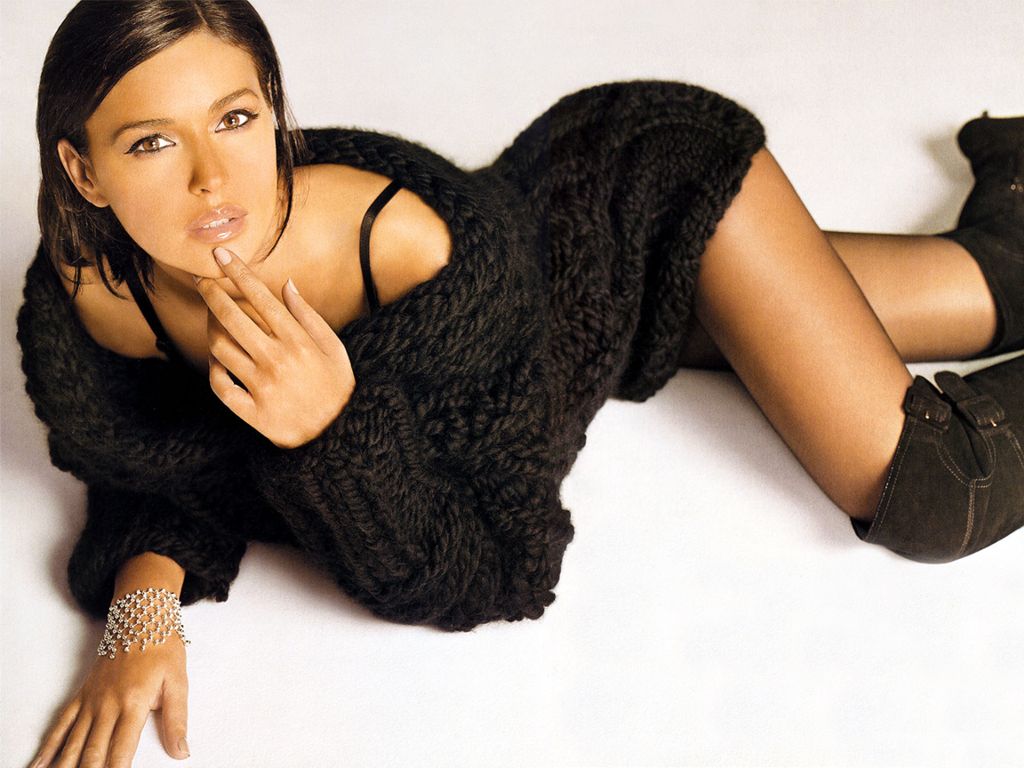
Was there ever any talk of having you play the wife instead of Alessia?
No, but you know what I like about Alessia? I like that in this atmosphere, an atmosphere that is very chaotic and very hysterical, she’s the only one who has both feet on the ground. And she’s in control, she’s very mature. She knows what she wants and that’s why I like her very much.
Is it hard playing in such emotionally intense movies?
Yes, because the film, in general, is full of emotions because there is a lot of passion all over. Every character is full of passion. And you see really well the Italian identity because we all yell a lot, which is typical of Italian people. We yell by phone and we yell all the time. The film is very simple. No special effects, it’s just a simple reality, every day life in Italy.
Is that more difficult for you than the physical intensity of “Irreversible?”
Oh, it’s very refreshing. It’s refreshing because “Irreversible” was such a strong film and very intense. To play just a simple woman who has simple problems in some ways- – okay, she has many problems because she gets divorced and she has two kids and she doesn’t love her husband anymore and, you know, there are problems, but compared to “Irreversible,” this is nothing. And “Irreversible” was really difficult shooting, but interesting, very interesting.
Is adultery perceived differently in Europe than it is in America?
You know, I don’t know actually. I’m so curious to see how the film is going to be received in America. In Europe, it was a successful movie and in Italy it was very successful because there are very interesting subjects for the Italian society. We see the concept of the family falling apart, and the concept of the family in Italy is something very, very important. We see how sometimes it’s difficult to mature in life as a person, while you’re living as a couple, because sometimes one or both have to give up their personal lives, their dreams, ambitions for the good of the family. And there is a moment in the film where my character, Alessia, says to Carlo, her lover, she says, talking about her husband, she says, “My husband destroyed everything I was. Destroyed my personality. And now that I’m different, now that I’m changed, he doesn’t want me anymore, he doesn’t love me anymore.” So maybe there is something missing in our nature as human beings. I don’t know. Actually, it was Oscar Wilde who says that each man kills the thing he loves. Maybe there is something in our nature.
Then there was another scene in the film that was very interesting, about the reality TV, and the desire to become famous for being famous, and how the TV gives today’s youth the possibility of doing this. Because, you see in the movie, there’s this young girl and she’s ready to do everything to become famous. And I think this is something that touches every country – America, Italy, France, England, all over. You will see all these people, they don’t know how to sing, they don’t know how to dance, and still they become famous. You know, just celebrities. And I think this is a very dangerous process.
But that’s why I wanted to do the film because when I read the script, I saw all those different and interesting subjects. I think that Gabriele Muccino is one of the best, talented directors right now in Italy. He knows exactly what he wants and he knows how to work with actors. And so for me, I’m Italian, so for me it’s important to go back to Italy once in a while and to make Italian films with my language.
 I Love Italian Everything