>
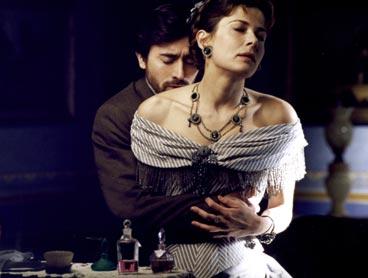 |
| Luigi Lo Cascio in La Vita Che Vorrei |
I think that I love Italian movies because of Luigi Lo Cascio. I always tell people that I have a crush on him and it’s really not that. When I keep my eyes open for him in Rome it’s not because I’m a crazy stalker, it’s because I admire him so much and love his movies. He’s got the most expressive eyes of any actor I know, and I am just so truly smitten by the passion in his work.
The first movie I ever saw in a movie theater in Italy was his “La Vita Che Vorrei
He was born in Palermo, Sicily in 1967 and at first thought he wanted to be a psychiatrist like his uncle so he went to medical school, but there were actors in his family too and that part of him won out, luckily for us. Another uncle, actor Luigi Maria Burruano recommended him to director Marco Tullio Giordana for the lead role in “I Cento Passi”(The Hundred Steps). I Cento Passi is the story of Peppino Impastato, a political activist in the 70s who opposed the mafia when even the politicians were denying its existence, becoming a sort of martyr for the fight against it. Lo Cascio ended up winning the David di Donatello (Italian academy award) for this part.
Italian film critic Enrico Lancia said that of the young actors of the new Italian cinema Lo Cascio is the most prepared, serious, and aware and the least “divo” or fake of all them all. I’ve read that he’s very intense, and likes people that are unhappy more than happy people because, according to him, they are more genuine. He calls himself a bit of a drifter and says he loves hotels and airports.
He’s been in a dozen and a half movies over the last 11 years and I’ve seen them all more than once. You can find many of them in the US including “La Luce Dei Miei Occhi


 I Love Italian Everything