 Sometimes Hollywood does it better – I’ll admit it. As stupid as the romantic movies can be, Hollywood does a better cheesy, heart-tugging, heart breaking love story. Surprising, really, given the importance of love in Italian movies and the huge percentage of movie titles with the word “amore” in Italian films. I wish Italy would make more romantic movies with a nice, attractive guy who falls in love with a nice, attractive girl and there’s laughing and crying and happy endings like “When Harry met Sally” and “While You Were Sleeping”.
Stories about humanity, stories with heart – Italy does those better. Italy casts the film better, gives them more realism, and generally cuts the crap in ways that Hollywood could take notes. Somehow Hollywood got the idea that we are all morons that have to be spoon fed plots that are without a shred of subtlety. Italian movies in general give the viewer a little credit – movies like the 2008 Si può fare – ( I would translate this as “You can do it”) with Claudio Bisio (who is really starting to grow on me – he did Benvenuti al Sud) and Giuseppe Battiston (one of my absolute favorites from Pane e Tulipani).
Si può fare is based on a true story, or as the closing credits say, “a lot of true stories” about life after the 1980’s Basaglia Law, when the Italian government closed down mental hospitals and released thousands of unprepared patients.
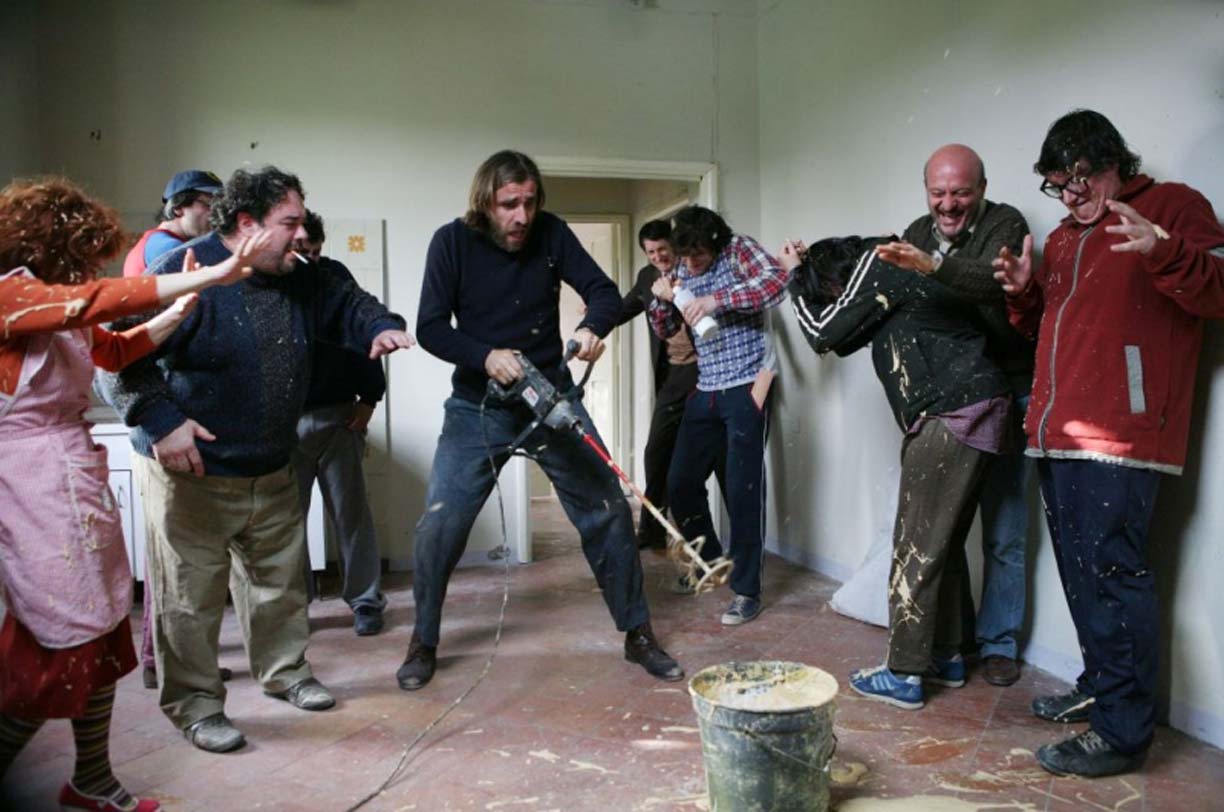
In Si può fare an out of work trade unionist, Nello, played by Bisio, takes a job working with a co-op consisting of these recently released mentally ill men and women who spend their days licking stamps on envelopes and subsidized by the government. Nello, who believes that they are capable of doing more with their lives – living like normal people – finds a doctor who agrees with him and together they cut medication levels and put them to work in a real company, making and designing parquet floors, and treating them with respect, as business associates.
Director Giulio Manfredonia (Qualunquemente) does a wonderful job of making what could easily have been overly sentimental and one-dimensional a heartfelt and inspiring story about the value of human life, the benefits of seeing beyond perceived limitations, and the empowerment that comes from friendship and encouragement.The actors who play the patients are outstanding, performing the illnesses without stereotypes or overacting.
I cried at the end of the movie – I was very moved by its warmth, its message, and the actors.
 I Love Italian Everything