 Cristina Comencini is a writer and director that Americans who love Italian movies know from La Bestia Nel Cuore, or as it was renamed for English-speaking audiences, Don’t Tell. La Bestian Nel Cuore, which was very popular and nominated for an American Academy Award, had its critics and was (unfairly, in my opinion) compared to soap operas and Lifetime movies. Still, it was widely applauded by most and enjoyed success.
Comencini’s new movie, Quando La Notte which premiered at the Venice FIlm Festival wasn’t so lucky. At the first press screening, during parts that were intended to be very tense and dramatic, audience members couldn’t seem to hold back laughter, and some even booed. I saw it, a few days later in an outdoor theater set up back in Venice, and everybody there seemed to enjoy it, but I’ve been trying to decide if the bad reactions were warranted. I don’t think I’ll ever understand the boos and the giggles, but I might agree that it wasn’t strong enough for Venice.
First of all, I’m not usually a fan of movies that are too obviously themed and too superficially deal with current events and problems. Lifetime movies do that, as did the Afterschool Specials that became popular when I was in high school. Meant to be educational, each episode dealt with a current concern, like anorexia, bullying, drug abuse, and teen runaways using not so subtle psycho-babble in an attempt to get the attention of young people who find themselves with these problems.
La Bestia Nel Cuore was Cristina Comencini’s Afterschool Special about incest, and Quando La Notte, about Post Partum Depression and the difficulties and loneliness of motherhood. A fair comparison or not, Comencini had better be careful with her next film choice, because she is in danger of becoming Italy’s answer to Lifetime movies. In a really good movie, the theme is too complicated to be expressed in a sentence or two. Good movies don’t manipulate audiences and lead them to single conclusions.
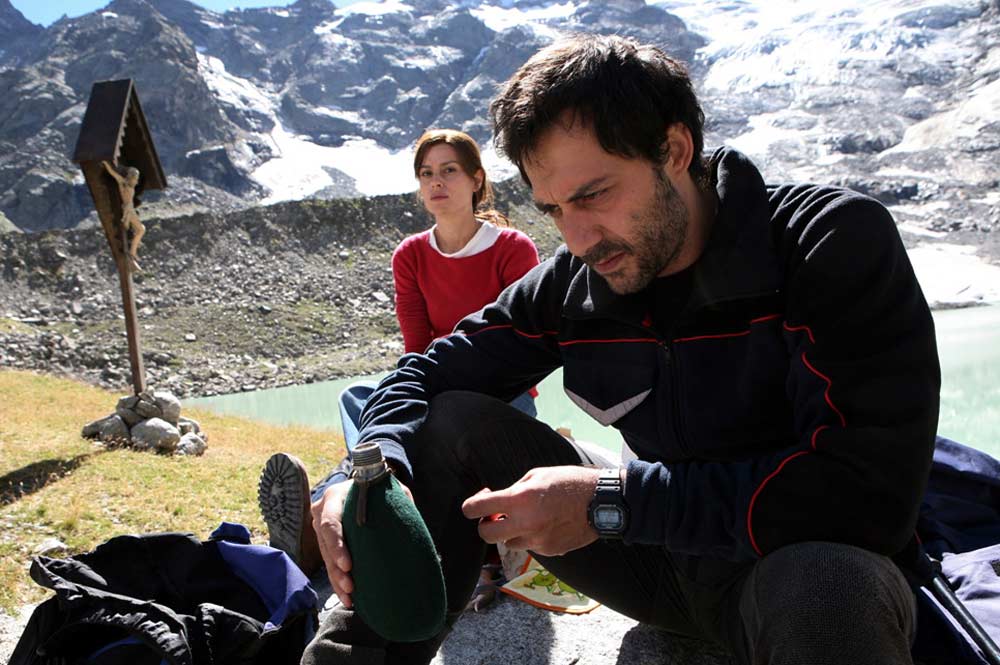
There is so much to like about Quando La Notte that I still feel very protective of it and angry with the people who laughed. First off – it is so freaking beautiful, filmed in Macugnaga in the Alpine Monte Rosa mountain range and the place that has jumped to the top of my list of places that I want to visit.
And then there is the acting; FIlippo Timi was totally believable as the gloomy, unfriendly landlord, Manfred, who rents an upstairs apartment to the young mother, who has been told that the mountain air would be good for her son. Claudia Pandolfini, who plays Marina, is completely wiped out and sleep deprived from her son’s incessant crying, and when Manfred hears a thud and then a sudden end to the crying, he know instantly that something isn’t right.
It isn’t the acting, but it might be the dialogue, that makes the movie seem more like a scripted commercial for antidepressants and less like real life. You have to show more and tell less, Cristina; didn’t anybody ever tell you that? I don’t think she gave the audiences enough credit; we would have figured out on our own, without all the conversations between Manfred and Marina, that Manfred was sensitive to the situation because of his relationship with his own mother. We could have drawn our own conclusions about why Manfred and Marina were so drawn to one another.
Even with the pointed dialogue, I’m not sure if I’ll ever really understand the attraction between Manfred and Marina. In my world, a guy threatening to have your children taken away from you doesn’t make you want to sleep with him. Like I always say, though, Italian love stories are very different from American ones.
Maybe I just liked this movie because Filippo Timi is SO DARNED GOOD LOOKING. At any rate, I didn’t hate it. But I can’t completely dismiss the boos and laughter at the Venice Film Festival.
 I Love Italian Everything