I was reading an editorial by Pino Farinotti on mymovies.it and he’s written something that I sensed couldn’t put into words, and even if I could have, didn’t want to; reasons that Italy hasn’t been in the running for an Oscar and may not be this year.
This year’s submission for an Oscar for best foreign language film, Emanuele Crialese’s Terraferma is excellent and should be a serious contender – I am biased, of course, but I seriously believe that. Even still, Farinotti looks at the history of Italian movies at the Academy Awards and makes some interesting observations. First, he lists the movies that have won:
1947 Oscar a Sciuscià, di De Sica
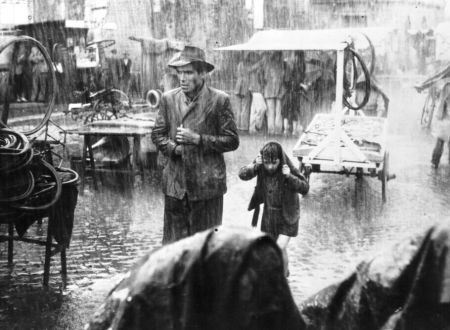
1949 Oscar a Ladri di biciclette, di De Sica
1956 Oscar a La strada, di Fellini
1957 Oscar a Le notti di Cabiria, di Fellini
1963 Oscar a 8 e mezzo, di Fellini
1964 Oscar a Ieri, oggi, domani, di De Sica
1970 Oscar a Indagine su un cittadino al di sopra di ogni sospetto, di Petri
1972 Oscar a Il giardino dei Finzi Contini, di De Sica
1974 Oscar a Amarcord, di Fellini
1990 Oscar a Nuovo cinema Paradiso, di Tornatore
1992 Oscar a Mediterraneo, di Salvatores
1999 Oscar a La vita è bella, di Benigni
Inadequate; that’s the word that Farinotti uses to describe the movies that Italy has submitted since 1999 to be considered for the Oscar: Fuori dal mondo, I cento passi, La stanza del figlio, Pinocchio, Io non ho paura, Le chiavi di casa, La bestia nel cuore, Nuovomondo, La sconosciuta, Gomorra, Baarìa, and La prima cosa bella. To be fair, over 60 movies from other countries were also “inadequate” – you can’t win them all. But his reasoning is interesting. Moretti’s La Stanza Del FIglio (The Son’s Room) won the Palme d’or at Cannes and it could be argued that it was robbed of the prize in Hollywood. Cristina Comencini’s La Bestia Nel Cuore (Don’t Tell), one of the actual nominations, was a very weak choice, says Farinotti – the “morbid story of a mother that offers her six-year-old daughter up to a pedophile father like a lamb to the slaughter.”
Of the other choices – are they too italian? Are they, as Farinotti says and as many others have, “roba nostra” – our stuff – movies that couldn’t really be appreciated outside Italy? For years, he says, Italy played the “mafia card” – Francis Ford Coppola made that one popular. But, he says, Giordana e Sperandeo aren’t really Brando and Coppola, and even when Italy tried to mix it up a little and substitute the Cammora with the Mafia (as in the movie, Gomorrah), they came up short.
This year at Venice there were five films that dealt with Italy’s immigration problem and Terraferma was one of them, so is he right? Has the selection commission been too “trendy” in their selection? And have they chosen a trend that doesn’t translate outside Italy very well?
Farinotti feels that Italy would have been better off sending Marontone’s Noi Credevamo (We Believed), the story of Italy’s struggle for unification, or Nanni Moretti’s Habemus Papam, the story of the pope’s therapist. These, in his opinion, tell more universal stories and have directors that are more powerful.
I don’t know. He’s right when he says that Tornatore, Salvatores, and Benigni can’t compare to De Sica and Fellini, but give me a break who can? To mourn the end of those “golden years” is short-sighted. That era was wonderful but nothing lasts forever – nor should it. Let’s give these new directors a chance and see what they can do. Terraferma may be trendy and “roba loro” – their stuff. We’ll see. If the aim is to win an Oscar, I don’t know if any this year would do any better than Terraferma. Hollywood doesn’t have to define Italian cinema unless Italy thinks it does. Hollywood is, a lot of the time, quite “trendy” and superficial all on its own.
 I Love Italian Everything