 The Cannes Film Festival website’s look at a decade of Italian movies:
ITALIAN FILMS AT CANNES 2000-2010
BY LORENZO CODELLI
The absence of Italian films at the 2000 Festival was interpreted as a sign both of the decline in production and of the public’s lack of interest at an international level. Since the turn of the new millennium, three memorable events have rewarded the efforts made to restore the image of Italian cinema, while nonetheless failing to pull it fully out of its crisis.
Firstly, the award of the 2001 Palme d’Or to La stanza del figlio (The Son’s Room), a sophisticated psychoanalytical exorcism directed by and also starring Nanni Moretti, who abandoned his characteristic comical style for the occasion. Then, the Un Certain Regard Award in 2003 for the film, La Meglio Gioventù (The Best of Youth), a pre- and post-May 1968 saga directed by Marco Tullio Giordana. Finally, in 2008, while the Jury’s Grand Prix was awarded to Gomorra (also known as Gomorrah) directed by Matteo Garrone, the Jury Prize went to Il Divo, an explosive two-part political work directed by Paolo Sorrentino of the type not seen since the joint Palme was awarded to Rosi and Petri all that time ago.
As for Ermanno Olmi and Marco Bellocchio, key protagonists of the rinascimento that took place in the 1960s, they have updated their creative form: the former with his ode to pacificism, Il Mestiere delle Armi (The Profession of Arms) and the semi-sacrilegious apologue, Centochiodi (One Hundred Nails); the latter with his hyper-sacrilegious fable, L’ora di religione: il sorriso di mia madre (My Mother’ Smile) and Vincere, an epic about the reincarnation of dictatorships. The “counter-informative documentarism” dear to neorealism would reach its peak with Carlo Giuliani, ragazzo (Carlo Giuliani, Boy), directed by Francesca Comencini, and Draquila – L’Italia che trema (Draquila – Italy Trembles), directed by Sabina Guzzanti.
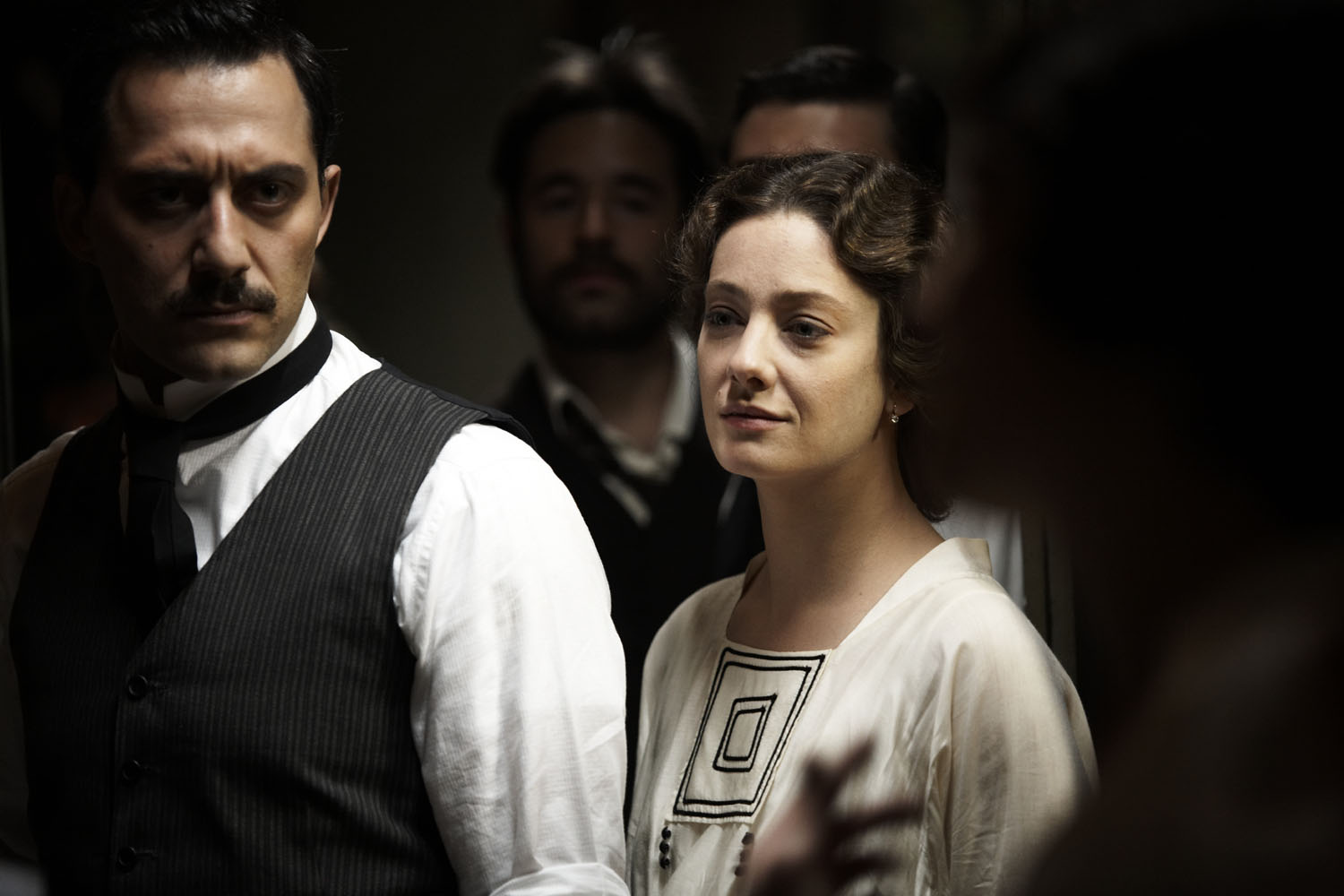
In Il caimano (The Caiman) Nanni Moretti pieces together an uncompromising satirical puzzle focusing on the all- powerful tycoon and politician. Paolo Sorrentino, disciple of the prolific Neapolitan school formed by Mario Martone, Antonio Capuano and others was honoured three times over at the Festival having skilfully shifted from a Tarantinoesque thriller (Le Conseguenze dell’amore – also known as The Consequences of Love), to a grotesque fable (L’Amico di famiglia – also known as The Family Friend), and then to political satire (Il Divo). In La nostra vita (Our Life), Daniele Luchetti – in the tradition of Rosi’s Le mani sulla città (Hands over the City) – attacks the corruption that is still rife in the construction industry and in our everyday lives in general. The film offers a slither of truth to light up what are dark times indeed.
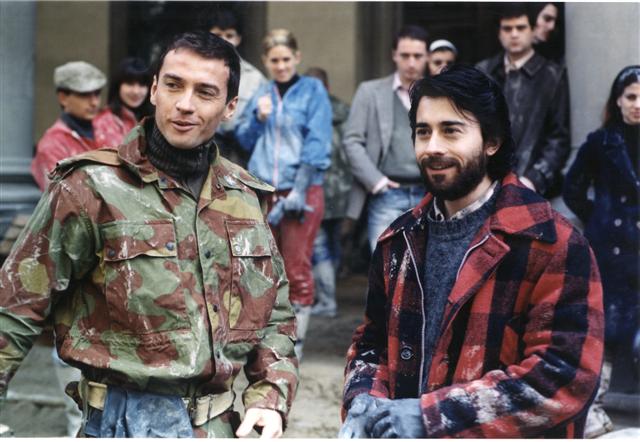
For Marco Tullio Giordana, “La Meglio Gioventù (The Best of Youth) ends like a relay race. Nicola succeeds in passing the baton on to the next generation. In contrast, others fail to do so, or maybe don’t even have a baton to pass, so they stop earlier on, short of breath. That’s what this film is all about. There isn’t any internal ideological discourse; we aren’t talking about the Italian left. We’re talking about Italy as a whole or perhaps the West. The feeling of being the last few remnants of an entire civilization. We no longer believe in collective redemption, but there is a clear appeal to individual conscience, to the choices that each of us knows we have to make”.
In a sociocultural context in which it would henceforth be almost impossible to pass the baton, this sweeping historical epic – which was, like Padre Padrone (Father, Master) and L’albero degli zoccoli (The Tree of Wooden Clogs), originally created for the small screen – paints a portrait of three generations through the prism of their aspirations, contradictions and fears. With long-lasting appeal for present and future generations, The Best of Youth draws upon certain narrative techniques from Visconti, Rossellini, Pasolini and Antonioni, while also referring to the great traditions of painting, literature and opera. The film is a game of mirrors which has moved cinema audiences around the world. Its merits include the discovery of a new group of very likeable actors and actresses: Maya Sansa, Jasmine Trinca, Sonia Bergamasco, Luigi Lo Cascio, Alessio Boni, Fabrizio Gifuni and Riccardo Scamarcio (the latter was hailed by teenagers as a reincarnation of Rudi Valentino).
Italian cinema is becoming increasingly decentralised, spreading to Turin, Naples, Palermo, Cagliari, Bari, Bologna and Trieste, thanks to the financial incentives offered by local institutions as well as the determination of a number of directors not to abandon their linguistic and ethnic roots. Despite encountering numerous difficulties and weak support from the authorities, a new wave of professionals has been able to start out in the industry. These brave, independent producers do not look down on either adaptations of bestsellers or comedies of manner – two genres which continue to draw crowds at the box-office. They include: Angelo Barbagallo, Francesca Cima, Carlo Degli Esposti, Nicola Giuliano, Domenico Procacci, and Riccardo Tozzi.
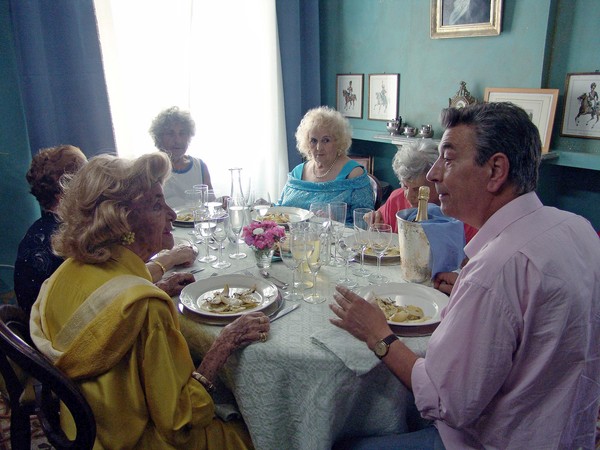
Among the most interesting screenwriters to have emerged over the past decade, it is worth mentioning Giorgio Diritti (L’Uomo che verrà – also known as The Man Who Will Come), Gianni Di Gregorio (Pranzo di ferragosto – also known as Mid-August Lunch), Matteo Garrone (Primo amore – also known as First Love), Vincenzo Marra (L’Udienza è Aperta – also known as The Session Is Open), Andrea Molaioli (La Ragazza del lago – also known as The Girl by the Lake) and Paolo Sorrentino (L’Uomo in più – also known as One Man Up).
|
Lorenzo Codelli is a journalist and historian. He contributes to the Festival de Cannes, the magazine, Positif, the International Film Guide and other publications. |
VIDEOS
 I Love Italian Everything