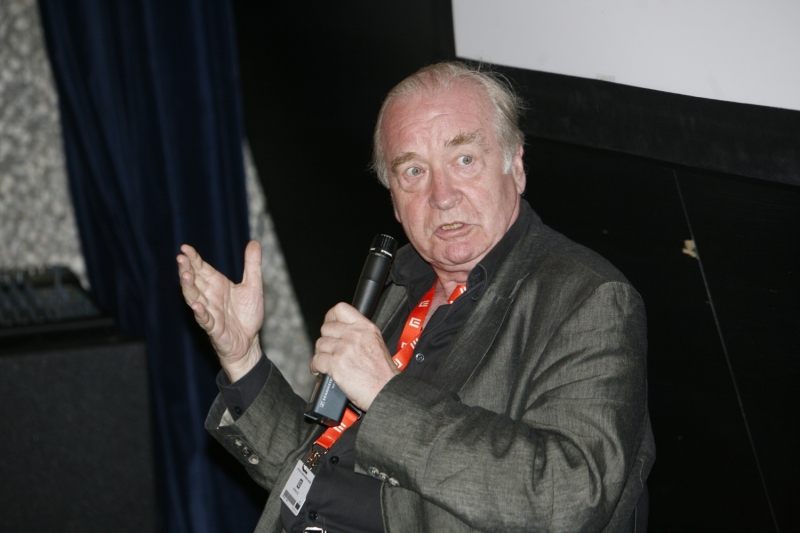
 Michel Ciment, celebrated French film critic, editor of the cinema magazine Positif and author of “Kubrick: The Definitive Edition” spoke this week at a round table discussion in Rome about Italian cinema and I don’t want to brag (of course I do), but he says what I’ve been saying:
“Italian cinema is experiencing a rebirth. To follow the great filmmakers (of the golden era) is a heavy burden, but for a few years there have been some really interesting work”.
He continued, “In ’63 when I started working for Positif (this year he’ll have been there 60 years) avant guard film was all Italian because it combined public success with artistic quality. The magazine has always maintained more space dedicated to Italian cinema than any other French publication, to the point that many French critics learned to speak Italian and we colaborated with many Italian critics (Goffredo Fofi, Lorenzo Codelli, Aldo Tassone, Paolo Mereghetti, Piero Arlorio, Gianni Volpi)”.
“Even today Italy and France have a prolific cultural exchange in the field of cinematography”, added Italian author Aldo Tassone. “The best films of the last few years have been co-productions with France, 15 in the year 2011.
“What’s missing in the Italian cinema publications is space for thorough examination , but Positif has always been dedicated to a critical study of Italian films”, said French writer Jean A. Gili. “We’ve always kept an eye on the Italian directors if they stand out, Nanni Moretti for example, or Roberto Benigni, even before the Oscars. In the last few years we have been very interested in Paolo Sorrentino”.
According to Lorenzo Codelli this attention has not been returned by Italy. “French cinema isn’t distributed and it’s studied very little, while in France a very important book has just been published about our cinema”.
Said Irene Bignardi, “The dialogue between Italy and France was interrupted by the great wave of anglisation in recent years. The most negative films about Italy are the co-productions with France that like to tell us how narrow-minded and bad we are. Probably if it hadn’t been for anti-Berlusconism, Cannes wouldn’t have made the exception to accept a film like La meglio gioventù.
The conclusion was that French cinema is the most dynamic in Europe today, but Michel Ciment said, “The Italians have forgotten their forefathers and have been creative under the influence of French snobism. Bertolucci thinks he’s Godard’s grandson, when he’s really Visconti’s son.”
 I Love Italian Everything