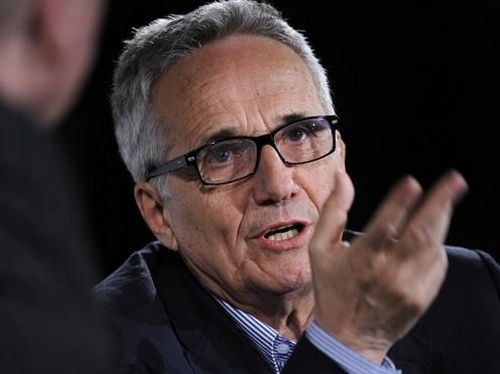
So we’ve seen the last of Marco Bellocchio and Matteo Garrone at the Venice Film Festival? So they say. Reading this article by Eric J. Lyman from the Hollywood Reporter I can only hope that one or both were misquoted or the victims of a poor translation.
The choices are simple. If Venice wants to remain an important film festival it must be international, and it can’t give Italians prizes just because Italian directors have threatened to pick up their toys and go home.
I love Italian movies, obviously, but I was thrilled that Pietà won at this year’s Biennale. It was a bold and interesting selection, and even I would have been disappointed to see Bellocchio’s Bella Addormentata win instead. If that had happened it would have been a sign that The Venice Film Festival had become too provincial and nationalistic to matter anymore. Is that what Bellocchio wants?
It’s just not attractive when an artist expresses himself creatively and then whines that nobody appreciates his work. If you’re a movie director you make a decision about how commercial you want to be and how much of yourself you’ll give up to make your movie a success. In the end, there are a lot of movies made in the world every year and Italy must agree to a fair fight on a level playing field at their film festivals to stay relevant.
Marco Bellocchio, Matteo Garrone Swear Off Festivals After Bad Venice Experiences
written by Eric J. Lyman for The Hollywood Reporter
ROME – Two of the leading Italian figures at the Venice Film Festival are saying enough is enough after bad experiences at the Venice Film Festival, which wrapped Saturday.
Director Marco Bellocchio said he will never again bring a film to the world’s oldest film festival, and jury member Matteo Garrone vowed to never again serve on an Italian festival jury after the lack of prizes for Italian productions sparked an outrage.
Bellocchio’s euthanasia drama Bella Addormentata (Dormant Beauty), one of three Italian films screening in competition in Venice, was applauded by critics, with some tapping it as a contender for major hardware at the festival. But instead, it earned only a minor prize: the Marcello Mastroianni Award for best new young actor, which was given to supporting actor Fabrizio Falco for his work in two different films.
Bellocchio’s film is a fictional account centered on the real-life story of Eluana Englaro, who in 2009 was taken off life support and allowed to die at age 39, 17 years after a car accident left her in a coma. The director, who was given Venice’s career achievement Golden Lion last year, rejected speculation that a film with an Italian theme was “too small” to win a major festival and said Venice did not treat Italian films appropriately.
“Never again will I bring a film to Venice,” said the director, who has been nominated for the Venice Golden Lion three times to go along with six Palme d’Or nominations at Cannes.
An Italian film has not won the Golden Lion in Venice since Gianni Amelio’s Cosi ridevano (The Way We Laughed) in 1998. Amelio is now in his last year as artistic director at the Turin Film Festival.
Meanwhile, Garrone, a two-time Cannes jury prize winner and the only Italian member of the main competition jury at this year’s Venice fest, vowed never again to appear on a jury in Italy, saying being on the Venice panel was “a nightmare.” He was criticized in the local press after Italian productions won so little hardware at the festival, under the artistic direction of Alberto Barbera, who returned to the job after 10 years away.
Aside from Falco, the next most important award that went to an Italian was for the best technical contribution, to E stat ail figlio (The Son Was Here) from Daniele Cipri, the other film in which Falco appeared.
Bellocchio and Garrone might yet have the last laugh. Their respective films Bella Addormentata and Reality are among the three titles industry insiders speculate will end up vying to be Italy’s nominee for the best foreign-language film Oscar, along with Cesare deve morire (Caesar Must Die), the Berlin Golden Bear winner from the venerable directors Paolo and Vittorio Taviani.
 I Love Italian Everything