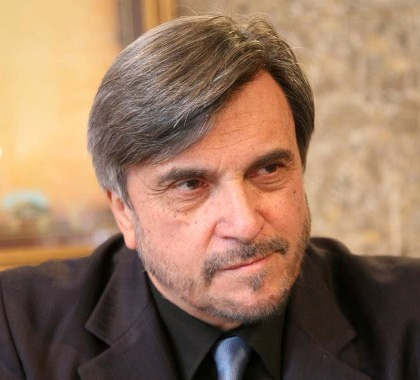
Movie critic and author of Italy’s very important Dictionary of Film, Pino Farinotti writes a lot about the state of Italian cinema, and below is his latest. ( http://www.mymovies.it )
He makes some very good points about the stories that Italian moviemakers produce, some that had not occurred to me. I’d like to add a few that may not have occurred to him:
a) The type of movie that Farinotti describes, the stories that have been told too much and in the same way, is simply the kind that gets the most attention in Italy. Movies with fresh approaches to storylines are often slighted by critics and award hander-outers (probably a better word for this): When you find a movie like Paola Randi’s “Into Paradiso”, Ivan Cotroneo’s “Kryptonite Nella Borsa”, and Luigi Lo Cascio’s upcoming La Città Ideale, let them shine! Let people know how great they are; don’t let them languish at the box office. When I’m in Italy talking to people, half of the Italians have never heard of the movies I love from their own country. I feel that critics like Farinotti are to blame for this – not the filmmakers.
b) YOU NEED MORE ROM-COMS! DUH! (or in Italian, DAI!)
Where are the good romantic movies?
c) Contrary to what Farinotti believes, Nanni Moretti is not the only one in Italy doing important work. Directors that he has lumped together as poor storytellers are, in fact, very innovative, like Paolo Sorrentino and Matteo Garrone.
Here’s my translation of his critique:
Pino Farinotti: I know a Italian-American who imports and exports films from America to Italy and vice versa; he begged me not to use his name for legitimate reasons. The problem is not that he is embarrassed, he explained to me. The problem is in the movies’ stories and the representation of the country. The stories have no general appeal and make Italy look like an unpleasant country, without hope and without morals, poorer than it really is. It’s cinema that doesn’t make Italy look good, doesn’t make you want to visit or invest in it. These are certainly opinions that are shared by a lot of people but it’s embarrassing when it comes from…abroad. And so I find myself defending our cinema, however personal and proud the reaction. And without rehashing our ancient and heroic history, I’ll begin with American films and say, “It’s not like those films, in this era, are so much better”. (my note: NO KIDDING!).
My first argument is in defense of the talent. We have wonderful moviemakers that have the means and the words, and they know how to paint a picture. They have imagination and they are poetic visionaries, but the problem is in the stories. I’m speaking of the directors like Sorrentino, Garrone, Salvatores, Martone, and Ciprì whose films are good but fade away.
One of the problems is the kind of film that take old, non-fiction stories that we all know and have been exhausted in the media, like Marco Tullio Giordano’s Romanzo di una Strage. A movie like this seems like a good story but really doesn’t add anything to everything we’ve all already known about it for the last 43 years. Also, Daniele Vicari’s Diaz, Don’t Clean Up This Blood about the famous G8 Summit in Genoa, another 11 years of detailed information. The film tells the story of a German anarchist, a young political leftist, a lawyer, a manager, an elderly trade unionist, 2 French anarchists, and a couple that finds themself there by chance. Too many people, too fragmentary. There aren’t any real protagonists and the story goes in too many directions. That’s another problem.
Finally, something good. Nanni Moretti, an Italian autore who succeeds in…getting out of the ghetto. His work knows how to cross barriers. He possesses a precious quality: he knows how to write.
I propose his Habemus Papam, a very good Italian film that the whole world would like. Michel Piccoli is the newly elected Pope but he’s afraid, in a crisis…of faith.
Truly formidable writing for cinema, especially for a director.
 I Love Italian Everything