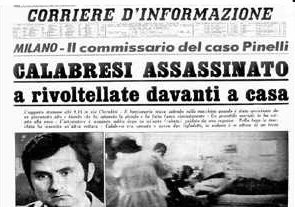
Romanzo di una Strage, or ‘Piazza Fontana: The Italian Conspiracy’ is a true story, and yet the truth may never really be known about police officer Luigi Calabresi, anarchist Giuseppe Pinelli, and a bombing in Milan in 1969.
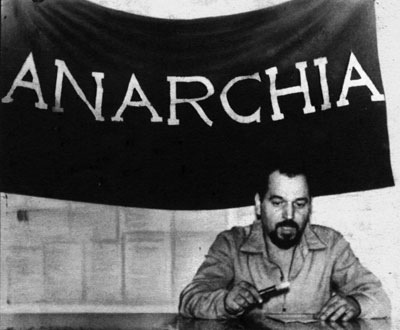
After the bombing, left wing anarchists were initially implicated and Pinelli was brought into police headquarters for questioning. When he fell to his death from a window, the police said it was suicide, but the public didn’t buy it.
Calabresi, who was not in the room when Pinelli died was not convinced either, and his investigation suggested that neo-fascists, possibly government sponsored had planned the massacre.
Read my review of the movie and then check out this 1969 news report from the BBC.
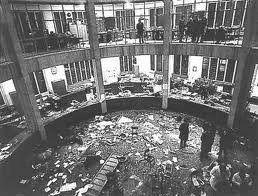
1969: Deadly bomb blasts in Italy
At least 13 people have been killed and more than 100 injured after a bomb exploded at a bank in Milan, Italy.
Up to 14 people were also injured in simultaneous blasts at a bank and memorial in the capital, Rome.
Another bomb was later discovered by police near Milan’s La Scala opera house.
The first explosion happened at about 16.45 local time on the third floor of Milan’s Banca dell’ Agricoltura (National Agricultural Bank), in Piazza Fontana.
Michelle Carlotto, 27, a clerk at the bank, said: “I was sitting at my desk behind the bank counter. I heard a blast, a bolt which stunned me.
“In the smoke I saw a body fly from the public section above the counter and fall one yard away from me. I was shocked, I couldn’t move.”
Many of the wounded were taken to hospital where they remain in a serious condition.
Police said eight kilograms (18lbs) of explosives had been placed in an aluminium box and a slow burning fuse was attached to the device.
Rome blasts
Within an hour of the blast, at least another 14 people were injured by three further explosions which shook two areas of Rome.
Another bomb was discovered by police a few hours later inside a separate bank in Milan, near the La Scala opera house.
Officers immediately detonated the device in the courtyard of the Banca Commerciale Italiana.
Police in Rome have detained four men so far but no organisation has yet claimed responsibility for the attacks.
The explosions come at a time of deep social unrest and political uncertainty in Italy.
Italian President Giuseppe Saragat condemned the attacks and pledged to “restore the law willed by the people and its sovereignty.”
The Prime Minister, Mariano Rumor, called an emergency cabinet meeting and in a news conference he said the explosions were “an act of barbarism which has no precedent in the history of the country.”
He later sent a telegram to the Mayor of Milan, Aldo Aniasi, which ordered the Minister of the Interior to “act with the maximum severity against those who want to poison the peace of the Italian people.
 I Love Italian Everything