Maybe it’s a mistake to read too much into a film awards ceremony; I certainly don’t spend too much time thinking about who won the Oscars. For the most part, the winners are surprisingly quickly forgotten; if I asked you who won the academy award for best actress and for what film five years ago would you have any idea? I had to look it up – it was Marion Cotillard for “La Vie en Rose”, and I did like that movie but I don’t think it was the kind of movie or performance that people are going to be getting sentimental about 50 years from now.
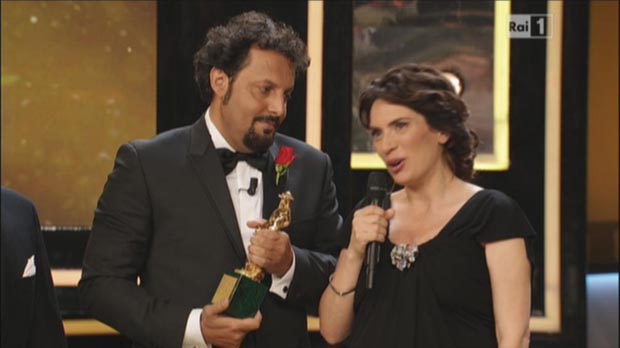
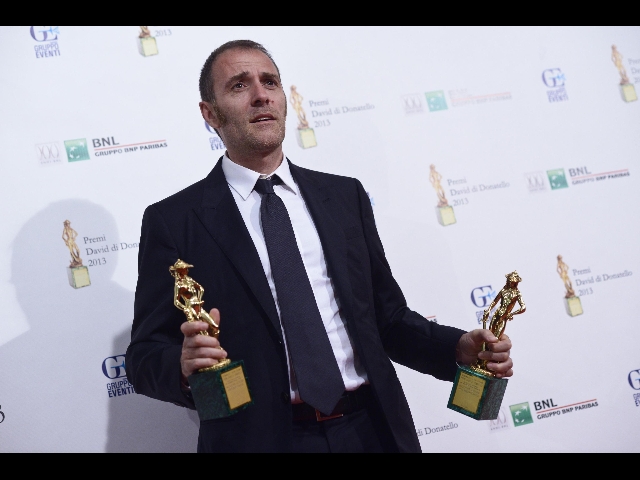
It’s probably the same for the Italian equivalent of the Oscars, the David di Donatello Awards, and maybe Margherita Buy’s win for Viaggio Sola this year is no more consequential, but as a whole, the awards tell me a few things about the state of Italian film.
First, Margherita Buy’s win says that Italy still has a lot of love and respect for its experienced actresses, and this is a double-edged sword. As a women about the same age as Margherita, I just love how she has no problem getting roles at her age and how she’s still cast as a romantic lead. When my husband complains that someone like Meryl Streep takes bad roles, I remind him that American actresses of that age don’t get offered good roles, and that Meryl is lucky to have the ones she gets. In Italy, it’s different, and as an over 50 woman I hesitate to complain about that, but I will, just a little bit.
Should the young and beautiful Tea Falco have edged out Margherita for Bernardo Bertolucci’s Io e Te? Let me answer that with a definite “Maybe”. Though Buy’s Viaggio Sola is doing very well at the box office and with critics and though without Buy’s performance it might not have been worth watching, Tea Falco’s role was far more complex and interesting. As the young heroin addict who holes up with the half-brother that she barely knows in his basement when he’s supposed to be on a school ski trip, she’s outstanding. So should the older actors step aside and make room for the new crop? I think there’s room for both; that Tea was even nominated this year means a lot.
The movies nominated for Davids this year were a happy surprise for me on a whole and recent years have shown that Italy is ready to open its door to the world, recognizing movies that are less personal to them and more appealing to an international audience. I don’t want to tell Italians what to like, but in past years the movies that were honored were about Italians in Italy and, at times, the least exportable and with the least appeal outside Italy’s borders.
This year, we have two English language films and one, Tornatore’s La Migliore Offerta (The Best Offer), won best picture. In the other, Educazione Siberiana, Gabriele Salvatores opted for a story about the Russian mafia instead of the Sicilian one. And remember, it’s not just the new, young directors that are taking new directions; Tornatore (Cinema Paradiso) and Salvatores (I’m Not Scared) are two of the most established in the business.
As subtle and delicate is Margherita Buy in Viaggio Sola and La Scoperta Dell’alba, that’s how much Maya Sansa over-acts in Bellocchio’s Bella Addormentata, and this is just a matter of taste; Italians love it and I do not. On the other hand, Andrea Mastandrea couldn’t have been more thoughtful and sharp in Gli Equilibristi, and I think that the days of over-the-top theatrics may be waning in Italy.
If I’m going to feel bad that Matteo Garrone’s Reality was largely overlooked I have to remind myself that it’s still an honor to be nominated and everybody can’t be a winner. I would have chosen Reality over La Migliore Offerta, but what do I know? I’m not even Italian.
So who cares what an American woman blogger thinks about the outcome of the Davids? Maybe nobody. Maybe Italians don’t see it as a good thing that their movies are becoming more universal, less isolated, and more broadly accepted, but I think it’s very good thing for Italians and for their film industry.
The French have done it without losing their identity and Italians can do it too.
 I Love Italian Everything