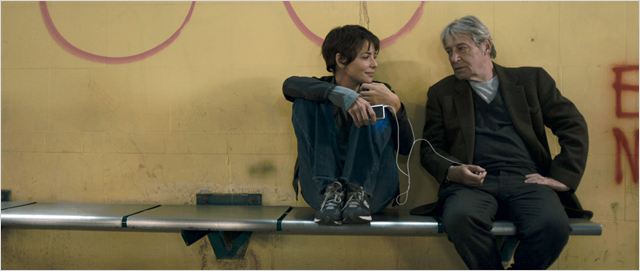
In Valeria Golina’s feature film directorial debut, Miele, she takes on a big subject, euthanasia, one that could have ended up being either too complicated or too cliché for a novice director. Instead, what might have been pedantic and sentimental propaganda either for or against the controversial topic is more the story of a person, more specifically a woman, with a code name “Miele”, and what she believes about the right to live the life that we choose.
“Miele” is Irene, played by Jasmine Trinca (The Son’s Room), an assisted suicide practitioner and therefore a virtual outlaw in Italy who flies to Mexico to buy a drug intended for dogs and uses it to help terminally ill Italians end their lives. She does this work in which she believes completely with detached efficiency, reminding her clients that they can back out at any time, acting the silent observer when they don’t, and then moving on to the next case.
As the suicides add up, Irene is like one of those characters in movies about excorcists or heroes fighting the forces of Hell, ones who after every battle with the devil are weakened and diminished. Like them, her work is gradually sucking the life out of her, and when she meets a man who is not ill but simply wants to die, she finds herself drawing a line.
In truth, Miele isn’t really a suicide movie but more about the people that have to spend a little too much time on Death’s front porch. Irene could have been a soldier, a cancer doctor, or a psychic who conducts seances. She’s belongs that society of people that see death every day and have to pretend that they don’t when they are out in the real world. Can anybody really successfully do that and not end up pretty screwed up?
I couldn’t help comparing Miele to Marco Bellocchio’s look at the right to die, Bella Addormentata, and I’m even more sure now that Bellocchio made some crucial mistakes that has Golino has avoided. Despite its superficial assurances that influencing us is the last thing it wants to do, Bella Addormentata lacks the subtlety to do anything but, while Miele gives the quiet permission to think for ourselves. It’s not overly overly sentimental and though I did tear up a few times, it is not a tear-jerker. And while the ending is not a huge surprise, it’s not predictable either.
Miele has been showing up at film festivals across the US and I assume with English subtitles, but the DVD that I ordered from Italy has no subtitles, not even Italian ones for the hearing impaired or for the occasional Englsh or Spanish in the film.
 I Love Italian Everything