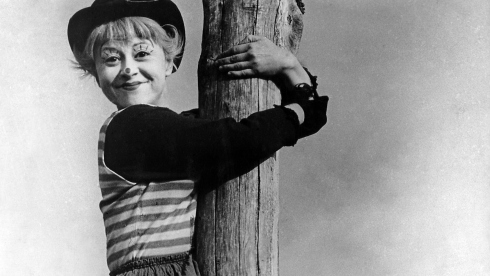
Steven Gaydos asks an interesting question about the “Best Picture” Oscar in his piece on Varlety.com : Is it really the “best picture” if we never really give foreign films a chance?
Take a look:
Over the decades, no matter how monumental the contributions of foreign-language directors who changed the vocabulary of cinema, helmers like Fellini, Resnais, Bergman, Godard, et al. were lucky to get their foreign-language film recognitions and the occasional writing or directing nod.
One of the films most often cited on the “how did that win best picture?” lists is Michael Anderson’s 1956 epic “Around the World in 80 Days,” a picture clearly higher on the “sciences” side of the Academy than the “arts” side. Meanwhile, over in Europe, monumental talents were cooking up revolutionary films that broke ground and entertained audiences at the same time, and they weren’t anywhere near the race. None of those films are more famous than Federico Fellini’s “La Strada” of the same year (pictured), which did benefit from the Academy rules change that had recently added a category for foreign-language film and which Fellini’s masterpiece handily won.
Still, Fellini couldn’t edge past one of King Vidor’s lesser efforts, “War and Peace,” to grab a director nom and wound up losing, ironically, to one of the rare foreign-language films to win the screenplay Oscar, Albert Lamorisse’s “The Red Balloon,” which was perhaps the foreign-lingo world’s equivalent of “Around the World.”
And there’s the Oscar lesson, proven year after year: You might win with a dark vision, but in general, keep it light and keep it in English.
 I Love Italian Everything