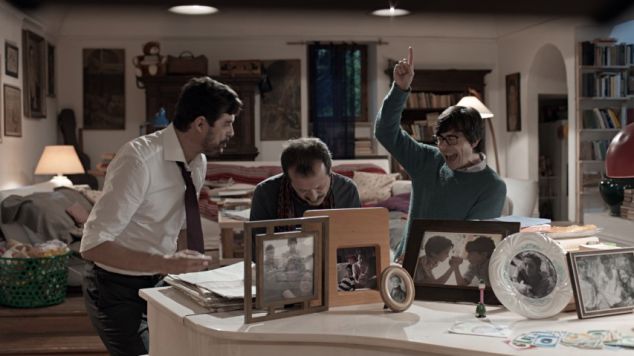
Based on a French hit, Le Prénom from Alexandre de La Patellière and Matthieu Delaporte, Francesca Archibugi and Francesco Piccolo have taken the comedy about friends at dinner and made it all Italian. In one family, Archibugi mirrors an entire country; the political left, that knows where it came from but not where it is going, the bourgeoisie, aggressive and unscrupulous, the politically apathetic, intellectuals, powerless and arrogant.

It’s a radical chic world in a fashionable, gentrified neighborhood where naming children things like Pim and Scintilla is the trend and this is Il Nome Del Figlio (The Name of the Son), in theaters from January 22. It’s been called the Italian ‘Carnage’, “but in reality”, says the director, “there is less anger and more love.”
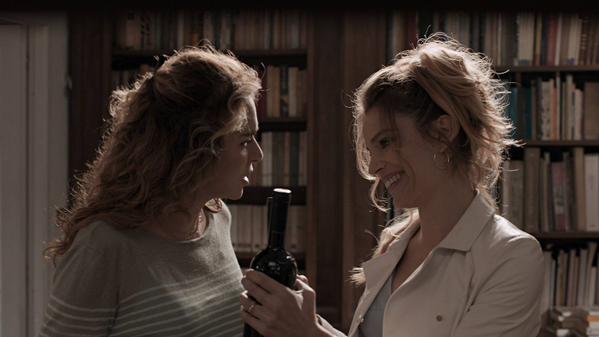
It’s love that has always tied Paolo and Betta, brother and sister, friends Sandro and Claudio. Betta (Valeria Golino) is a college professor that’s going all out to make a happy family and has married Sandro (Luigi Lo Cascio), a university lecturer who vents his frustrations on Twitter.
Paolo (Alessandro Gassman), the black sheep of the family, has chosen another path, selling real estate and flaunting fancy cars, a Rolex, and a beautiful wife Simona (Micaela Ramazzotti) who has just published a best-selling book and announced her pregnancy.
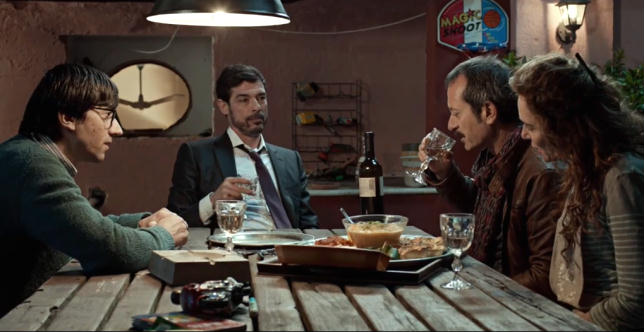
Completing the ensemble, their friend Claudio (Rocco Papaleo) is a musician and confirmed bachelor, maybe gay, who is Betta’s confidant, the keeper of her secrets and the shoulder she cries on.
The five friends find themselves at a dinner to celebrate Simona’s pregnancy when Paolo announces that the baby will be named Benito all hell breaks loose. The choice of name sparks verbal chaos in which the group’s hypocrisies, kept previously in precarious balance, begins to crumble.
It’s an ensemble film in which each of the five actors, four of them directors themselves, have their own moments to shine, and the whole group joins to sing ‘Telefonami tra Vennt’anni’, an ’80s hit.
“We have made a film with painstaking detail in the construction”, explains the Roman director, “but there was a lot of room for improvising”.
For the screenwriter, Francesco Piccolo, “the story was already there, but we created the characters, seeking something that belongs to us. We transformed every single character into someone who we know, someone like us, someone who we wanted to be or would not have wanted to be, maybe without even realizing it. To be able to speak badly of ourselves and at the same time look at ourselves with tenderness we needed a strong backbone to start with.”
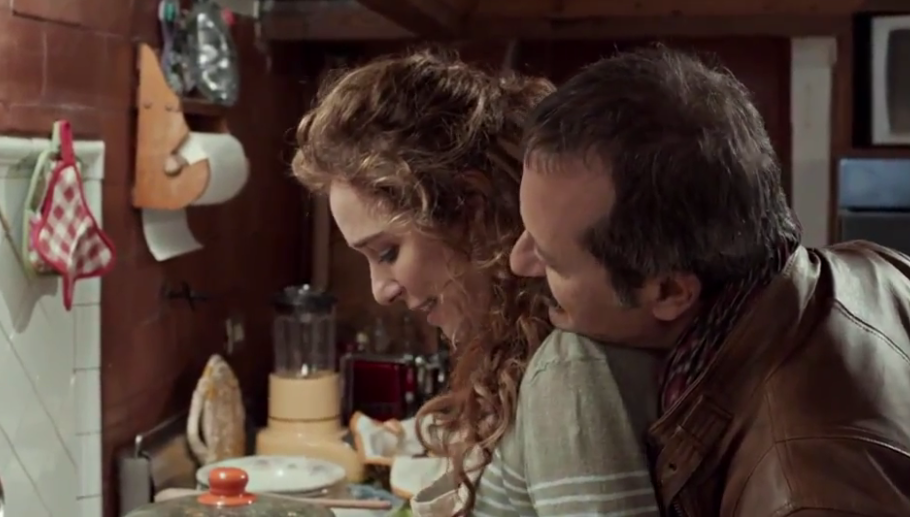
The film relies on flashbacks, the vacations to Toscana where the five friends, in their youth, seem to have their futures mapped out for them. Produced by director Paolo Virzì, the “President of the Francesca Archibugi Fan Club”, as he jokingly calls himself, the film ends with Archibugi personally filming Virzì’s wife, Micaela Ramazzotti, giving birth to their daughter Anna, “with all the tears and a trembling video camera”.
“Paolo and I”, says the director, “have known each other for years and we exchange scripts and talk about them. We make a good team in the end, for example, writing a chain of emails with the minister of health appealing the ban on smoking in films.”
“Italian cinema has an identity but nobody outside Italy realizes it. We come after the greats, and it’s a little like trying to follow the Renaissance. But we fight to make films for the theaters, and we seek to lose our narcissistic vanity because the market is what it is”
“The hope was to create a non-snobby comedy, to tell but not judge. As Jean Renoir said, everyone has their reasons.
Translated liberally and badly (sorry) from Cristiana Paternò’s article in Cinecittà News.
 I Love Italian Everything