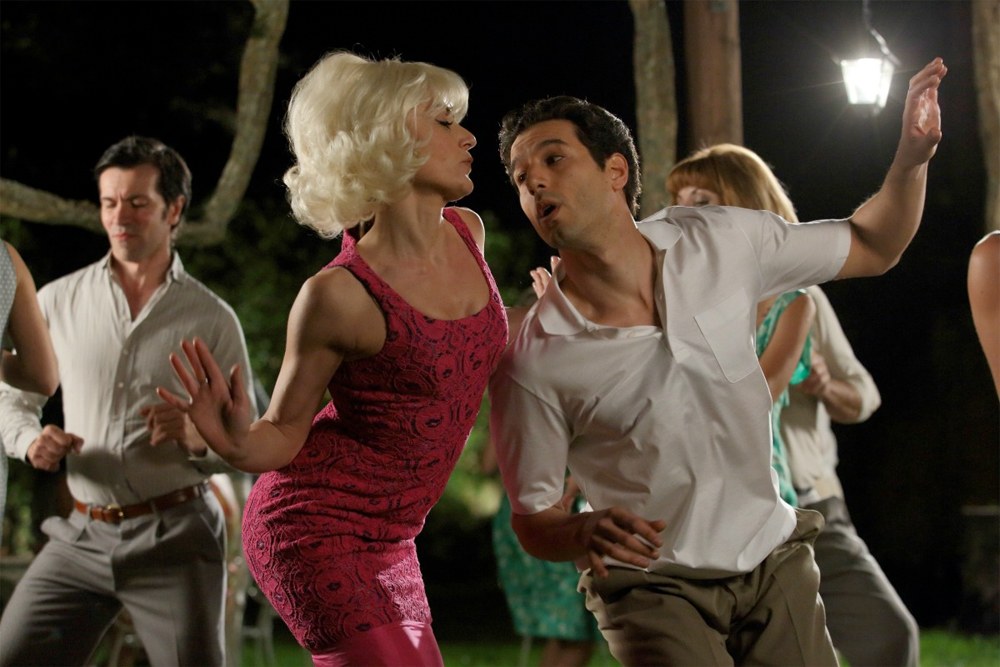
You have one more chance to see Latin Lover at New York’s Lincoln Center, tomorrow at 1:30 PM.
Latin Lover: Loving the past but being free from it.
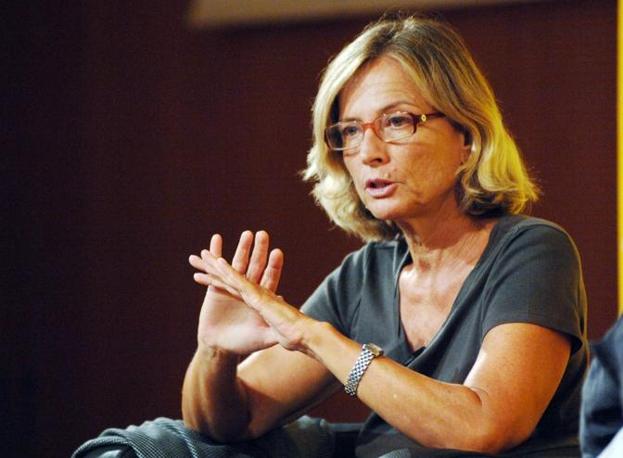
Writer/Director Cristina Comencini has been at this for a long time with great success, having written novels and screenplays, and directed films like the award-winning Don’t Tell (La Bestia Nel Cuore), but her newest film, Latin Lover, exceeds every expectation.
In it, golden era film star Saverio Crispo has been dead for 10 years and his eclectic and complicated family has planned a memorial for him in his Puglian hometown. Crispo, who “left a lot outside of the scene”, collected wives, lovers, and children from all of his movies. Two widows and five daughters (maybe six?) gathered for an uncomfortable family reunion in the family estate, rehashing old grievances and uncovering secrets. Though the daughters all had different mothers and different nationalities, they shared names that began with the letter “S”, a sort of “factory label”, explained Saverio.
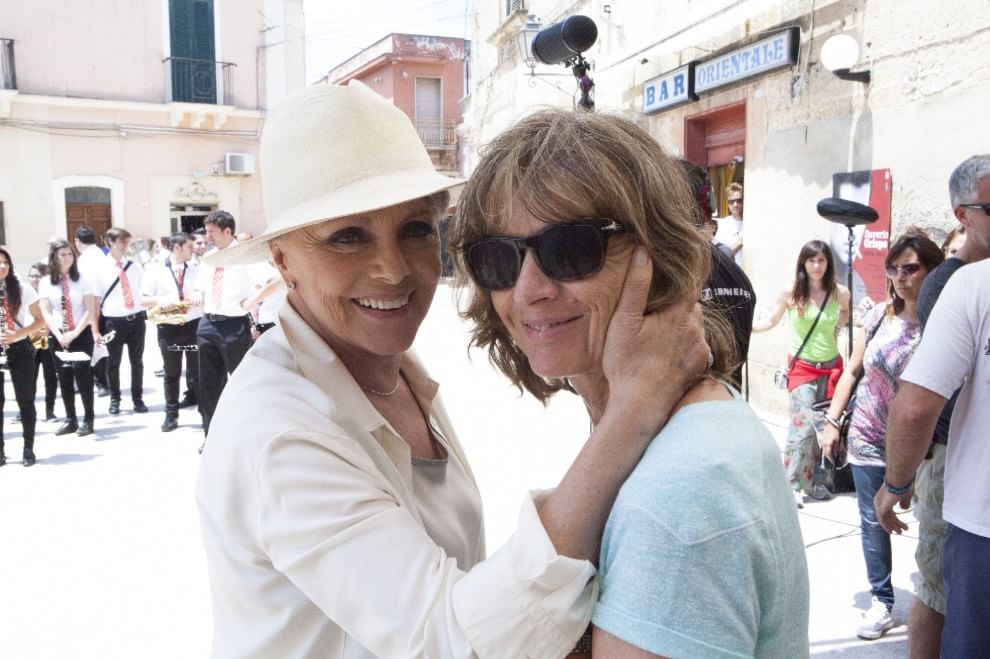
I asked Cristina how growing up with her own famous father, director Luigi Comencini, influenced the screenplay, and she reminded me that her life was very different from that of the daughters in the film. “Yes, I am the daughter of a famous director but we had a normal life. We were four daughters, but my mother didn’t work and we didn’t go to the set. But I started working with my father after I started writing with him. Having said that, when we would come home from school we were breathing the air of cinema, talking about it all the time.”
It was common to walk past her father’s study and hear him arguing with screenwriters and so the atmosphere was there, and she may be her father’s daughter, but Cristina Comencini is in nobody’s shadow. With multiple awards for films like Bianco e Nero, Il Più Bel Giorno Della Mia Vita, and La Bestia Nel Cuore, Cristina is one of Italy’s most important directors. La Bestia Nel Cuore, Don’t Tell, was nominated for the Oscar for best foreign film in 2006.
But first and foremost she considers herself a writer. “Everything is created first in writing. What I love is to sit down with a pen in my hand and at my computer and to write and invent characters, to build characters on paper before they become alive on stage or in a film.”
“The truth is, I sort of start off at a philosophical premise, an idea for a story, before the story evolves. In the case of Latin Lover, it began with the idea of loving the past and being free from it. Everything else follows from that.”
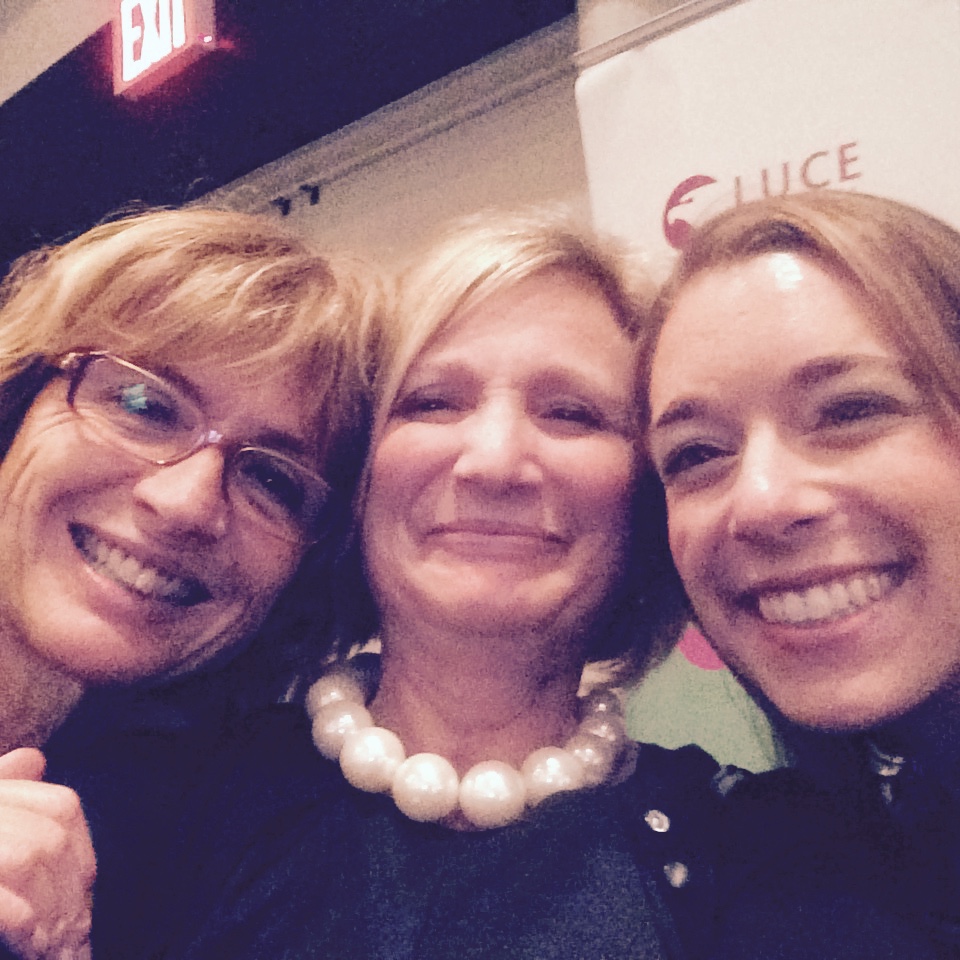
I was getting the idea that she wasn’t giving herself enough credit for her film’s finished products, and I told Cristina how much I loved her dialogue. So many times, ensemble comedies are all about the jokes and the lines are stilted and affected. I told her that I found the dialogue in Latin Lover, as in all of her films and plays very natural and true to life, and I got very lucky; she shared with me her “trick” to writing good dialogue.
“For dialogue to sound natural, it shouldn’t be entirely realistic. This is something that I really learned from (François) Truffaut, that the dialogue had to be superior than it actually would be in good life. It has to be more important than the things we say in everyday life. There has to be interactions with the character, whether it be comic or dramatic, but what a good actor knows how to do is how to pass off, the way we construct the dialogue, to make it sound natural.”
“I’m a kind of authoritarian as a director”, she told me. “An actor or actress can make a change but they have to tell me about it first, and we might establish something in our read-through, but once we’ve established a script, they have to stick to the script.”
“As I was saying before about the dialogue, the things that are said have to be more important, and the dialogue should sound natural, but natural doesn’t mean improvised. I think it’s important to be commanded by the writing, because that also establishes a single style for yourself.”
And it hit me: this is why I love Cristina Comencini so much. She’s not just a wonderful director, she’s an author, and she brings the written word and the characters to life in ways that aren’t as important to some other directors. She’s a story-teller extraordinaire, the kind that is bringing Italian cinema back to where it should be – the top.
 I Love Italian Everything