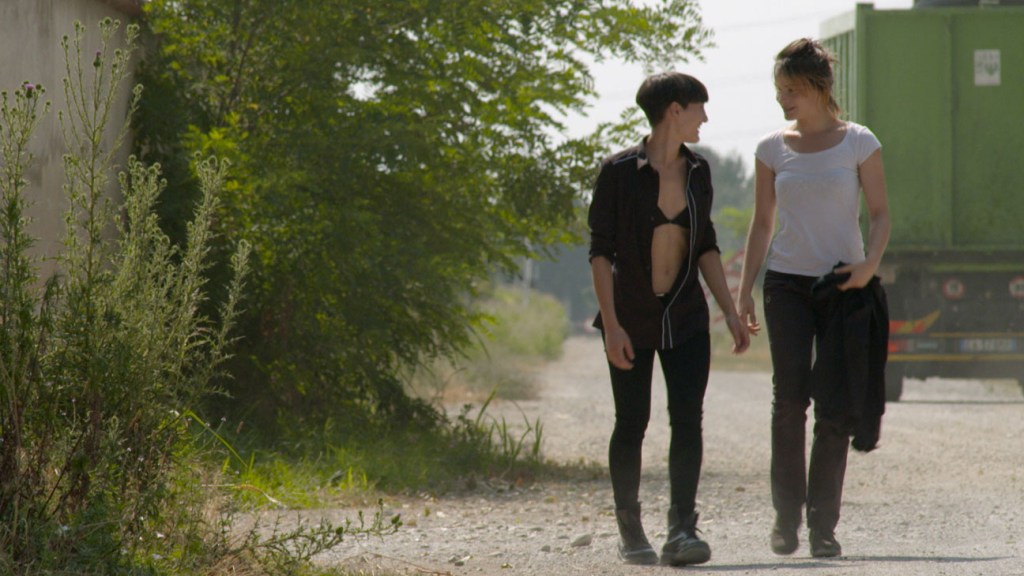
Available September 16 from Amazon, Piccola Patria directed by Alessandro Rossetto is a disquieting and hyperrealistic film about two young friends, Luisa and Renata who live in the Veneto region of Italy. They are trying to save up enough money to leave it, but the two girls make 250 euro a month as waitresses and they need to find another way to earn cash.

Which of the girls during that long hot summer came up with the idea to use Luisa’s boyfriend Bilal in a super sick blackmail scheme against the perverted friend of her parents? I’m guessing it was Renata, who regularly takes money for sex from the perverted family friend anyway, and though I was guessing is a lesbian and hates every minute of it (though director Rossetto says, “no”, I’m wrong about that), is willing to do pretty much anything to get what she wants.
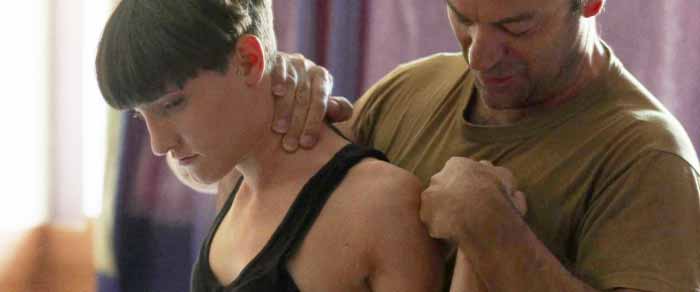
The backdrop is Veneto, an agricultural region in which many long for independence and fear the immigrants like Bilal that are arriving from Albania, believing that they are stealing jobs and opportunities. Luisa’s father is nationalistic and Xenophobic, and the anger and frustration he’s feeling becomes a powder keg of emotions that could explode with any number of the things that are swirling out of control in his life.
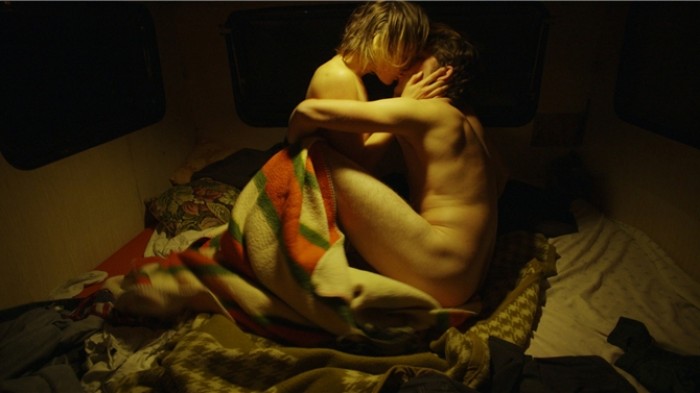
Rossetto, a former documentary maker, has done everything right with the look of the locals; their dress, their homes, their work. The dialogue is realistic and at times seems almost unscripted, but not so much as to take away from the telling of the story. It’s real, but we’re kept on track with its point.
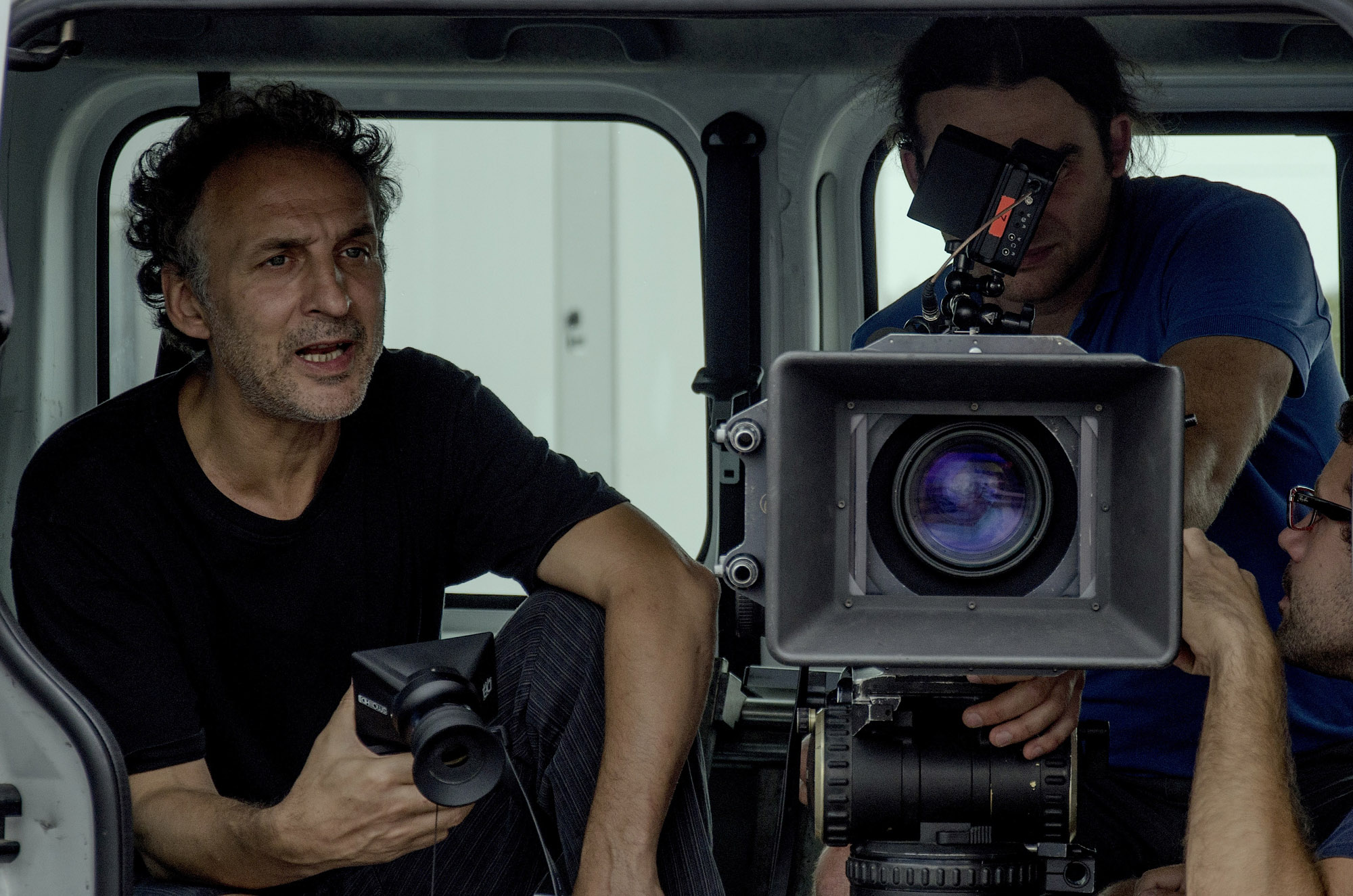
I first saw Piccola Patria at the 2013 Venice Film Festival and walked out of the Biennale’s Sala Grande feeling like I’d been punched in the stomach. I suppose this shouldn’t have been the first thing I said to Rossetto when I interviewed him about his film, but that’s what I said.
“It was really depressing”, I added.
But I couldn’t help it; my first impression was that it’s a portrait of the hopelessness of today’s dead-end youth. In it, Luisa and Renata want out of their impoverished lives in northern Italy badly, and they’ll do anything to make their dreams of escape possible. I admit that, at first, I didn’t see the hope in any of it.
But I was mistaken, insisted Rossetto. “There’s love, and redemption for Luisa and Renata.” Their misguided attempts to use blackmail to get the money they needed was part of a “moment of indecision” in their process of maturing.
“The others in the film are entirely lost”, he laughed, but he wasn’t joking, talking of his “classical tragedy”. And for once, this Italian film’s tragic circumstances weren’t in southern Italy, as are most of the stories of a lost and broken Italy, but this time in the Veneto region, the one “everyone thinks is rich.”

Seeing the actors behind me in the Biennale’s Sala Grande I was particularly impressed, because if I hadn’t seen them there with their suits and fancy dresses, I might have forgotten that Luisa, Renata and Bilal were actors and not really the characters in the film that they so authentically portrayed. Actress Maria Roveran, who plays Luisa, is absolutely amazing and a rising star worth watching. A singer and composer, she wrote and sung parts of the film’s soundtrack.
And the soundtrack is powerful and moving, one of my favorite things about this movie, with two traditional songs from the region, Joska La Rossa and L’Aqua ‘Ze Morta, sung by a booming chorus as the film opens and closes.
I highly recommend this one, with two thumbs up, five stars, and every other way there is to put a film on top of the list.
 I Love Italian Everything