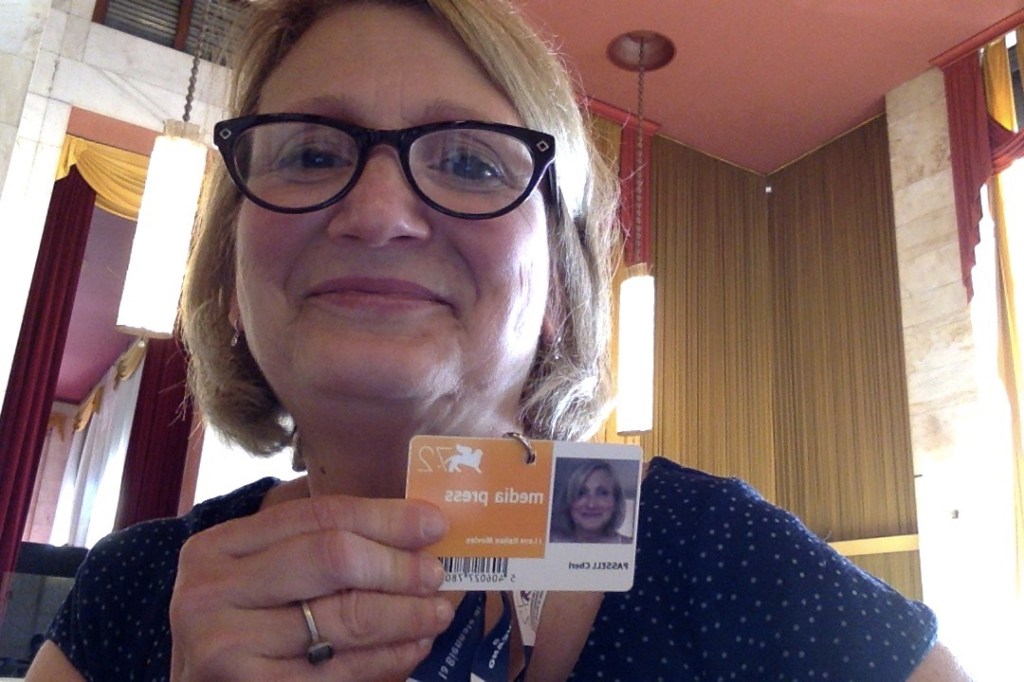
You get older, but your press pass photo keeps you young.
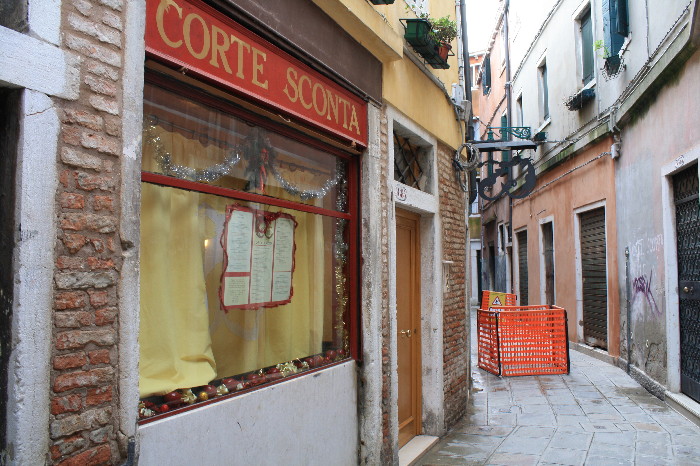
And speaking of getting older, I did what I never used to like doing when I arrive in Italy; I slept all afternoon. Then it was dinner at one of our favorites, Corte Sconta, lots of wine, and we never even made it over to the Lido.
But I’m here, finally, and my first film is at 3:00 pm, Italian Gangsters from director Renato De Maria at Sala Darsena.
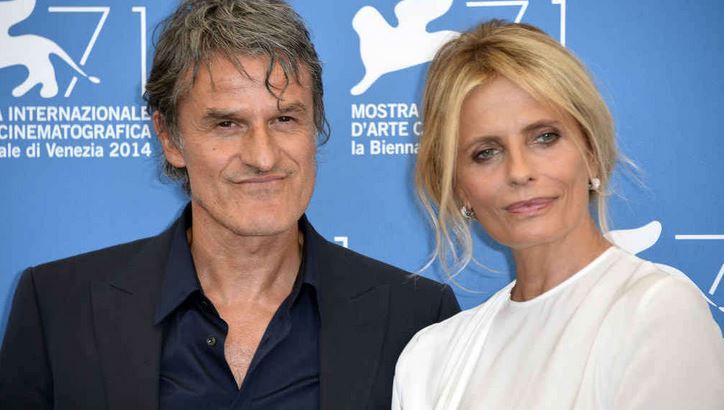
From the festival’s website:
It’s “An original, spectacular journey through the most sensational exploits of the local underworld. Thirty years of violent stories sanctioned by news and films. A gallery of faces, testimonies and period footage. A many-voiced portrayal following the trail of the main exponents of Italian crime that becomes a tumultuous tale of the social transformations that have run through the history of our country.”
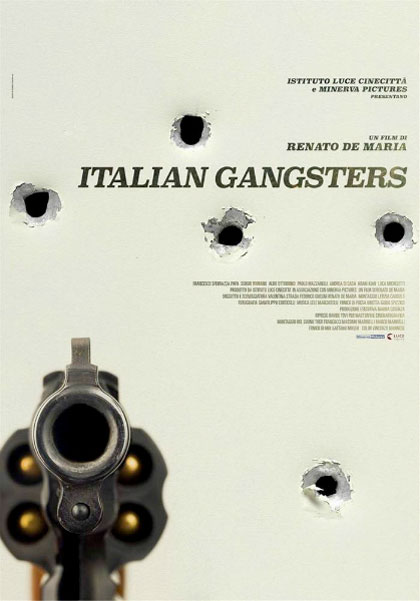
And from the director:
We started from an open search through the archives of the Istituto Luce, with the aim of collecting stock footage strongly centered on the impressions and description of the moment. Then we built a series of monologues conceived as interviews, interrogations and confessions. Our intention was to remain bound to the characters, to their faces and their words. We laid no claims to factual realism—though the narrated events are all true and documented—but, rather, to psychological truth, to give voice to our characters. We drew a portrayal of each of them, gathered from contemporary articles and interviews of the people concerned, penned by prestigious journalists and writers of fiction, such as Dino Buzzati, Indro Montanelli, Giorgio Bocca and Enzo Biagi. The Rai’s archive footage completed the function of visual historic documentation already provided by the footage from the Istituto Luce. Raro Video also gave us the opportunity to obtain material from their collection of important titles of Italian cinema from the 70s. The visual text provided by the films in question immediately became metalanguage, a mythological reconstruction of a collective unconscious. We then obtained images from the “Home Movies” archive, which collects Super 8 films portraying Italian families between the 50s and the 60s. These materials are deeply subjective, almost abstract in their closeness to a domestic intimacy that would otherwise have been inaccessible.
 I Love Italian Everything