
You haven’t seen Qua Vado yet? Well, somebody has. Clearly, many of you have seen it twice.
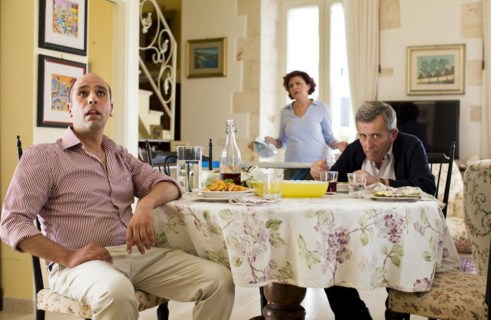
So in the first week of Checco Zalone’s newest film Quo Vado, he’s made almost as much as he did with his last record-setting film, Sole Di Catinelle. Despite the protests, the groans, the vows to never set foot in a movie theater showing a Checco Zalone film, SOMEBODY is setting a foot whose theaters (and some of them more than just the one time) because in just one week, box office sales have gone over 40 million euro.
To put things in perspective, his last film, Sole A Catinelle set records with a total of 51.948.550 €.
So what’s so funny, and does it translate? Take a look at the state of Italian comedy in the third millennium.
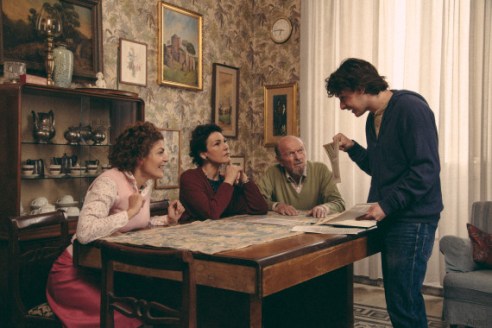
Last year’s Venice Film Festival gave us Pecore In Erba a knee slapper that non-Jews like me had to wonder how hard we could laugh at without appearing antisemitic. It’s kind of like when white people are laughing too hard at jokes with the N word; “are they laughing with us or at us?”
Director Alberto Cavaglia seems to get that we’re laughing with, and beyond that, he doesn’t seem to even care, with his giddy cinematic romp that lampoons hatred. A little boy becomes a national hero when he makes it his life’s mission to humiliate Jews.
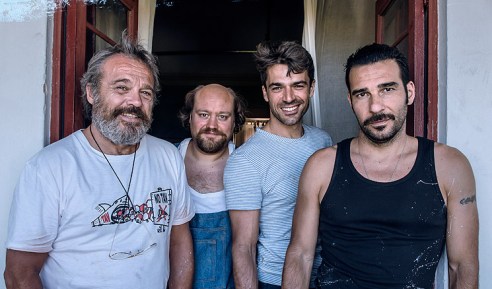
Noi e la Giulia was the comedy of the year according to the Italian National Syndicate of Film Journalists (Nastro D’Argento Best Comedy) and the foreign press (Italian Golden Globes, Best Comedy) and I’m not going to argue with them. Noi e la Giulia (The Giulia and us) deserves the accolades, but it isn’t laugh out loud, “rolling in the aisle” funny; in its own way it is inspirational, and a call to action for all of us who need to stand up and stand for something.
In this scene from the film, the boys try to figure out to do with the mobster that’s come to shake them down.
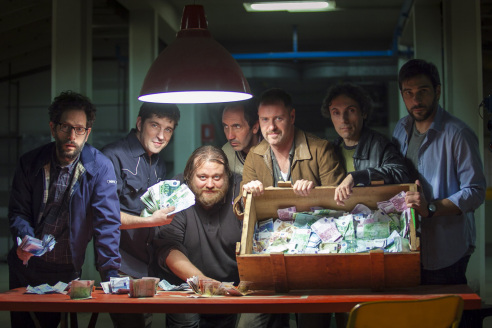
In Smetto Quando Voglio, out-of-work Pietro is sure he can design his own recreational drug; one that has none of the substances that are banned by the Italian government. It’s still illegal to sell what he comes up with, but that’s a minor technicality.
His criminal organization is in need of other skills, so he rounds up all his unemployed friends, from a math genius to chemists to help him, and at first, it’s as if they have struck gold.
Next thing they know, they are armed robbers holding up a pharmacy.

In Scusate Se Esisto, the Lucille Ball of Italian cinema Paola Cortellesi is also in need of a job (a recurrent theme in economically challenged Italy). This one is classic rom-com, a genre I’d love to see more of in Italian movies.
Raoul Bova…oihlà!
On the list of biggest box office hits in Italian history, Benvenuti Al Sud, a specially charming remake of the French film “Bienvenue chez les Ch’tis” (Welcome to the Sticks). Alberto and his family (his wife, Silvia played by Angela Finocchiaro) lives in a small town not far from Milan and dreams of moving to the big city but when Alberto applies for a transfer he learns that handicapped people are being shown preference. Alberto fails in his wacky, not very believable attempt to make superiors believe he’s needs a wheelchair to get around and his punishment is 2 years in the south.
Next thing you know, Alberto is heading for his new job near Naples. Because of the perceived crime, poverty and squalor he leaves Silvia and his son at home and tells them he’ll be back to visit every couple of weeks, but what he finds in his new home is not what he expected, of course, and his perceptions are challenged and changed. In the scene below, Alberto finds out that the language is a little different down south.
And then there’s Checco. Take a look at his original comic songs from his first two films. In the first, he sings to Angela, the girl who is breaking up with him, in an attempt to win her back. In the second, he tries to show his gay cousin that he’s cool with the lifestyle by singing in a gay bar.
Funny? You tell me.
 I Love Italian Everything