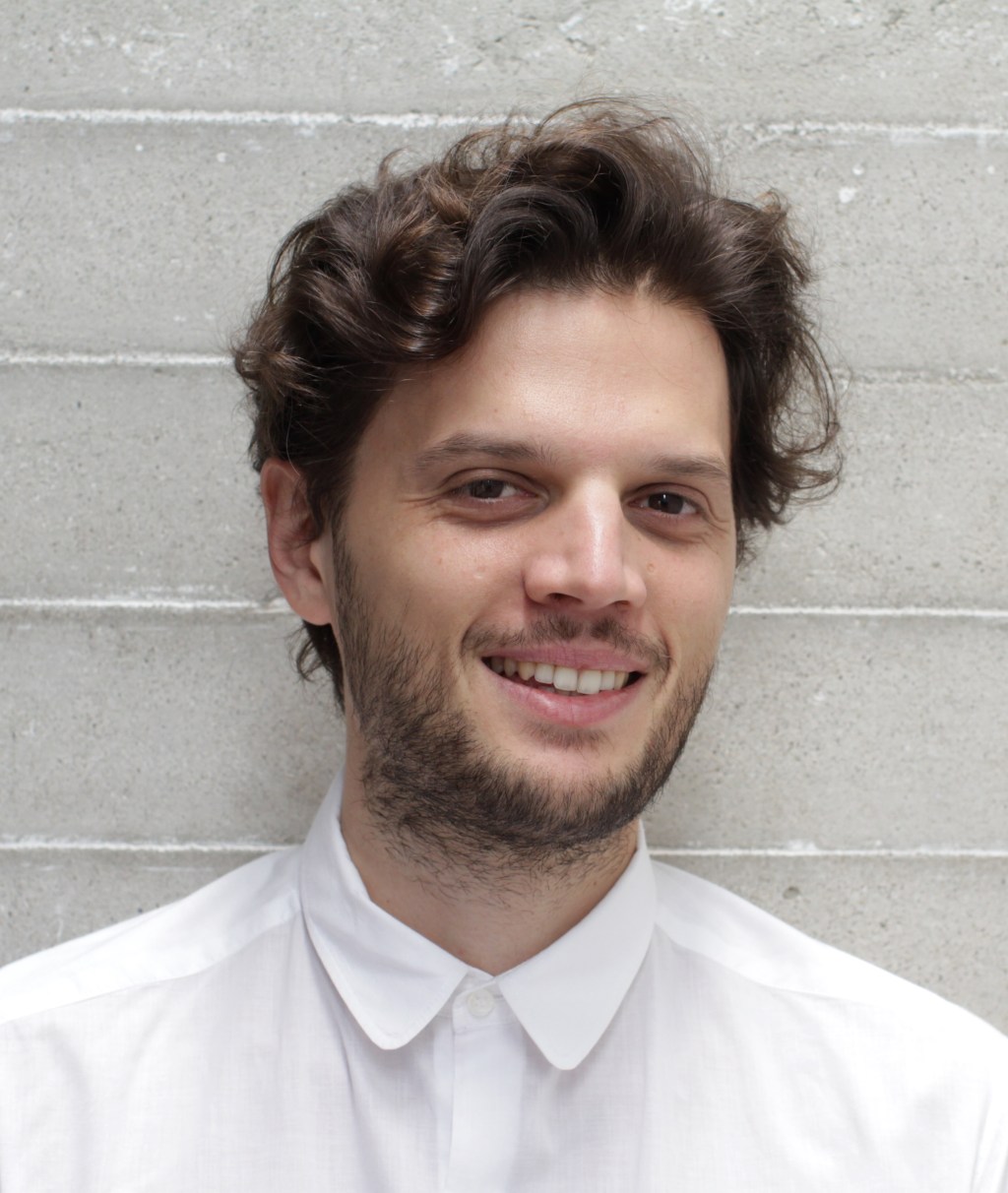
A conversation with Leonardo Guerra Seràgnoli, the young, bright and especially talented Italian director of Last Summer.

After having watched Leonardo Guerra Seràgnoli’s enigmatic film Last Summer, it’s become my new obsession. Its US premier is coming soon, January 24 and 26, at the Slamdance Film Festival and we’ll be watching for more dates this year. My head was positively swimming with questions (and it still is) about the movie, but Leonardo asks us, “How important is to answer questions that only create more questions?”
GET TICKETS FOR LAST SUMMER (1/24/16)
GET TICKETS FOR LAST SUMMER (1/26/16)
You’re a musician? I see that you studied film scoring in Boston. If so, what do you play?
I entered Berklee college of Music as a singer. I used to have a rock band back in Italy in the early ’00. In Boston, I studied singing before moving into filmscoring.
How did you make the transition to directing?
The transition happened naturally. I first moved from singing to writing music for film (due to the passion for films I had since I was a boy) then while I was still studying music I shot my first short film and felt something special on set, a passion I had never experienced before.
When I graduated, I moved to NYC and shot a second short with a US producer.
That experience stays with me as the beginning of my career in filmmaking. It’s been my crash-course in filmmaking.
What kind of director are you? Do you allow improvisation or do you like actors to stick to the script?
I am very meticulous in the preparation of a project because I believe the more I know in advance, the more I can improvise on set. I do like when actors use improvisation discovering new layers to their characters and go to unexpected places.
So many Italian directors are making English language films these days. Why do you think that is? Is it a good thing or a bad thing for Italy?
It is true and I believe it’s specifically connected to the desire to grow their sales.
I don’t think it’s necessarily good. I do feel that when you (as an Italian) decide to work in English for selling purposes (without holding anything against those who trie to fight the tragic state of our industry), stories tend to suffer from a lack of authenticity.
When you work with a certain language you should try to be as close as possible to the culture behind it. This is not always the case and the approach of Italian directors working in English.
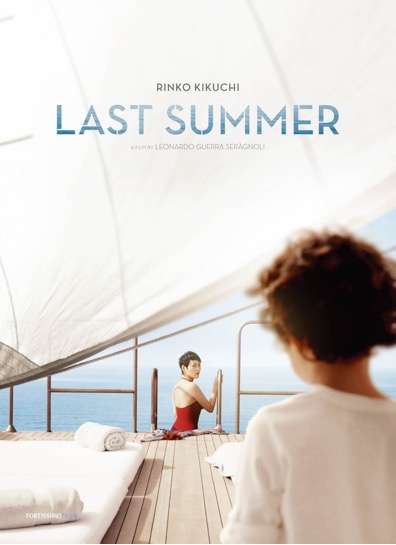
In my case, the project was written for Rinko Kikuchi and she only spoke English and Japanese so Italian was not really an option.
A second reason why I thought English was the right choice for Last Summer is the environment (the boat) the film is set in. A boat is a microcosm of different cultures that use English to communicate.
In Naomi’s case, English represents the wealthy side of the story, but also the colder (transaction-oriented, ruled-based) part of the relationship with her son.
And for Naomi, English soon becomes her past.
I read somewhere that you got the idea for this film when you met a woman who had lost custody of her children – is this true?
Yes. Retrospectively (after I had shot the film), I realised that when I was about 13, I had witnessed a woman (friend of friends of my mother) crying openly while talking about her husband attempting to obtain custody of her children.
The film though had developed from a recurrent question: what would a mother do if she only had few days with her son before separating for a long time?
In my last years, I found myself often attracted by mother-son stories that silently fed what then became Last Summer.
Rinko Kikuchi is very beautiful and talented – how did she come to be cast in the role of Naomi? Were you looking for a Japanese actress or was the decision more by chance? Did you make the character Japanese because you wanted Rinko, or did you choose Rinko because you wanted a Japanese character?
I grew up in contact (through my father) with the Japanese culture and I wanted the character of my story to be culturally distant from Europe. Japan is the more distant and different culture I knew closely enough and hence the possibility to write for a Japanese character was present in me but not a certainty.
When I met Rinko at the Venice Film Festival, I understood that I had found the character I was looking for. Especially because I had the chance to talk to her for a few minutes and perceived that, beside her talent, she could give something more to the story (at the time she was moving to the US) if she were prepared to play the part.
So I wrote the script for her, thinking about her being between the US and Japan in her life. I never imagined though that I would have ended up working with her.
It all happened thanks to a coincidence. The contributing writer (Banana Yoshimoto) happened to know Rinko personally.
Tell me about working with the little boy. You made working with children look so easy.
Working with Ken has been wonderful. I am usually very careful in using pompous adjectives, but he’s been just wonderful.
I was very scared to work with a kid, even more because he had never acted in a film before, and even more because I had never directed a child in a film. When I got to know him better before the shoot though, I sensed it was going to be all right.
And on set, he proved to be naturally skilled. He’d come and suggest small changes to his lines (most of the things he added, are now in the film) and would always know his scenes in every detail.
He helped me a lot, also to keep the rest of the cast together. He has been walking-joy among us.
I have so many unanswered questions after having watched the film twice. I ask myself, what did Naomi do that caused her to lose custody of her son? Was it substance abuse? Was she considering suicide? Why did Eva lose her temper when Naomi wanted to have the picnic? Was Rebecca having an affair with Naomi’s ex-husband? There were clues, but are these questions undiscoverable, or would I figure out more if I watched the film a few more times?
I believe the answer is inside each one of us. My question to you would be: how important is to answer questions that only create more questions?
Questions distances us from feeling, are part of our human desire (today this has become even a stronger need) to feel safe at all time.
If the film has succeeded, there should be one place in there where you can feel safe. A safeness that hopefully we should be able to take with us after the film has ended.
What is your next project?
A father-son story set in Rome in the near future.
Which Italian directors do you identify with?
Without being able to really separate myself from the influence of many Italian directors I truly admire (Fellini, Rossellini, Visconti and Pasolini), I do feel very close to Antonioni’s work.
What do you think of the state of Italian cinema 2016?
Too many films made. Too much focus on the “Christmas” (cine-panettone) films. Too little visibility for talented auteurs (young and old). Too little attention from the Ministry of Culture towards cinema. Too little experimentation. Too much bureaucracy.
Does it sound like a healthy state?
I do have to say that the above saddens me, because I believe there are many talented young directors with original and personal voices (like Sebastiano Riso, Laura Bispuri, Jonas Carpignano, Maura Delpero, Bonifacio Angius among many others) that deserve to be known around the world and to be looked at attentively and considered proudly the future of our cinema.
 I Love Italian Everything