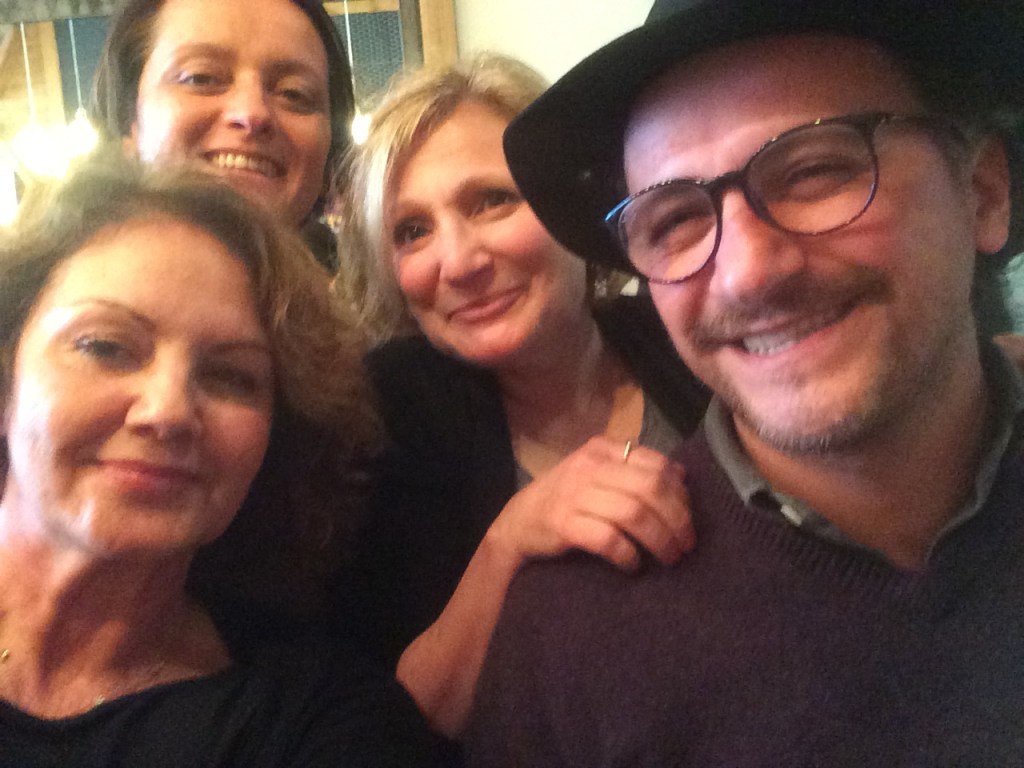
The director of Montedoro is 43 today.
Faretta’s unique and yet universal story of a woman who searches for, finds, and then doesn’t really know what to do with her roots is one of the most compelling I’ve heard, and it only took him seven years to talk the film’s subject into letting him tell it.
If you are in the New York area, come to the NYC premier on March 30!
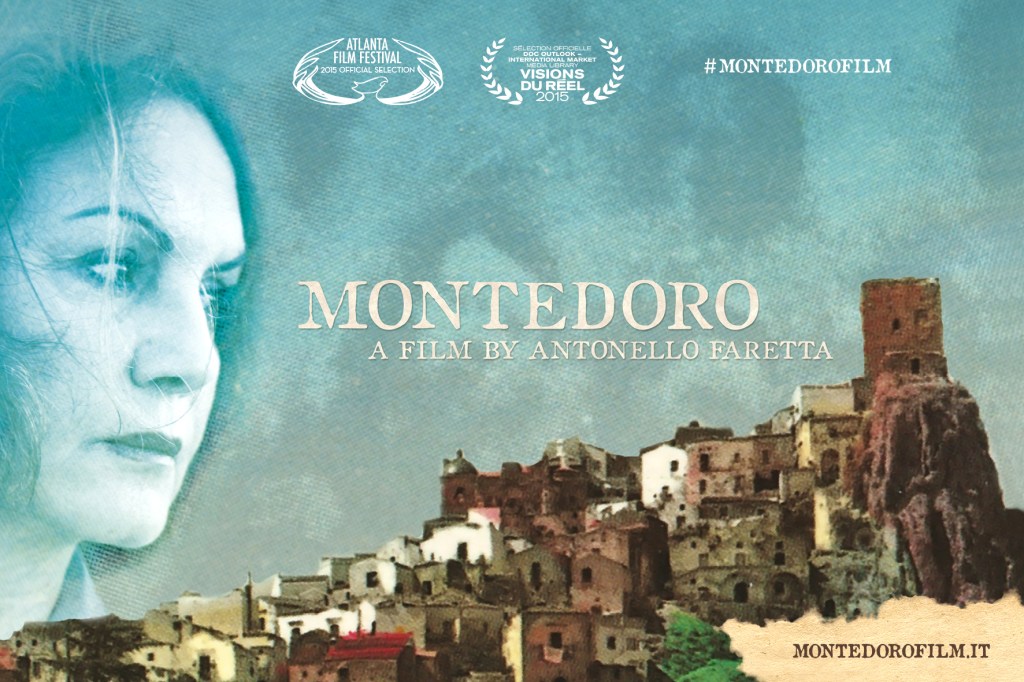
In Montedoro, an American woman from New York, has just lost her adoptive parents and has come looking for her natural mother in the town of Montedoro (the ancient name for Craco in Basilicata), but hadn’t realized that it was now a ghost town. The film is based on the protagonist’s (Pia Marie Mann) true story of the search for her birth mother, and the facts of her past.
Faretta, Pia, producer Adriana Bruno and I took over a coffee shop in New York’s Gramercy Park neighborhood and they talked to me about Montedoro, the “film without end”.
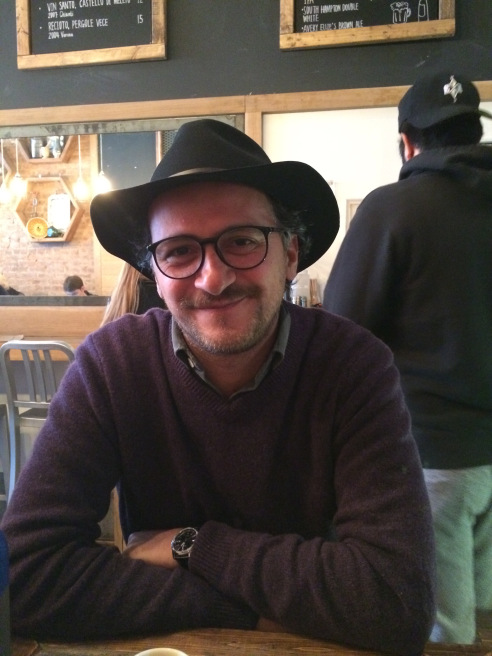
“I like films that follow the waves of life and don’t try to dictate the story. There’s an arrogance in the ones that make it obvious that, this is the start, this is the focus, and this is the end. With Montedoro, in fact, there is no end,” said Faretta.
“Pia was the beginning”, he said.
When Pia and Faretta first met she didn’t want to share her story. Traumatized by memories of leaving Italy at five years old and being adopted by an American couple, then years later learning the facts about her parentage, she just wasn’t ready to put it all out there. In the seven years of preparation for the film she got to know her birth mother and saw her father (“a bad guy”, said Pia), two times. “I knew I was adopted but I didn’t know they were still alive.”
“When we started this project I was a totally different person”, Pia told me. As Faretta started putting the pieces of her story of survival together, she said that she’d “go to sleep to dream of a life that would be real”. Emotionally raw, she and Faretta knew that they couldn’t tell the whole story, because, “the real story would have been too sad, too dark.”
“We didn’t want to make a documentary”, said Faretta, who “travelled the path of destruction” with Pia and helped her find her truth. At the same time Faretta was discovering some truths of his own.
“Montedoro is very important to me”, said Faretta, “Seven years making it was my film school.”
Faretta and everyone involved realized early on that lots of different kinds of people would identify with Pia’s story for a variety of reasons. “Everyone is looking for his motherland”, he said, and he talked about the film’s political significance.
In it, a cab driver that takes Pia to her birthplace looks out over the beautiful Basilicata landscape and wistfully says, “Look how beautiful it is here”. He stops the cab to gaze over the Basilicata landscape. “It’s been years since I’ve been here.”
We realize right away that the “here” is not just a geographical location for him. It’s the place where simple people lived simple lives, respected the land, and loved their lives. He’s living far away both physically and spiritually from this “magical place” and the realization breaks his heart.
Talking with Faretta, it’s clear that the cab driver is speaking for him, who told me about what he sees as a kind of disconnect that modern Italy has with its own past, a disrespect for the land, and its lack of solidarity as a nation.

“We don’t have the same sense of community that the US has. We’re very isolated”, he said. When I told him that it didn’t seem that way to me, and he agreed that people have strong connections to their families and towns, but that “as a nation, we just don’t have that.”
“Finding your truth makes you stronger”, says Pia. ” I used to be two different people. Now I can rest.”
“I’m not the same,” she said.
“I’m not either”, said Faretta.
In the meantime, check out the film’s gorgeous website, one that Faretta plans to make interactive, inviting us all to share our own stories and tell how we identity with Pia and the film about her life, Montedoro.
 I Love Italian Everything