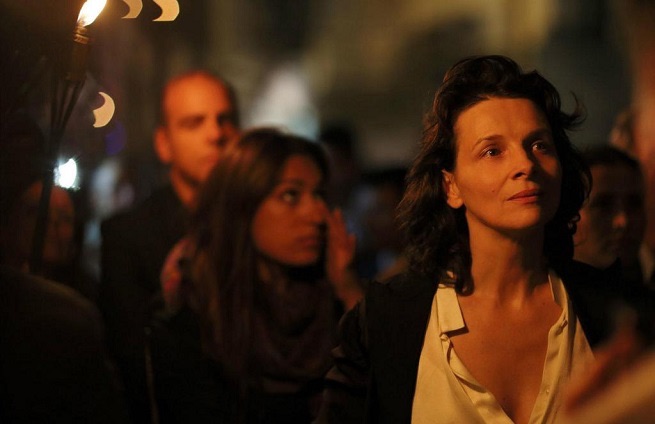
I first watched at the Venice Film Festival and this is the film for which I’ve ever revised a review. The first time…I just didn’t get it.
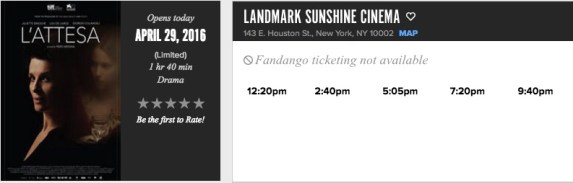
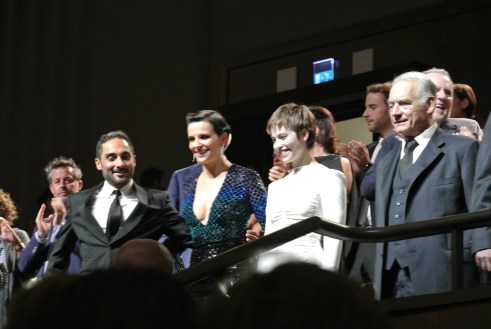
Director Piero Messina is the definition of prodigy; he started making films when he was 16, was assistant producer to the master, Paolo Sorrentino, when he was in his twenties, and managed to snag Juliette Binoche and Lou de Laage for his directorial debut.
There was no choice, he told me, he wanted Binoche for his first film, desiring “the best”. It wasn’t until she agreed to be in the film that Piero said to himself, “F*ck! She’s French! She’s a problem!” But as the Laotian proverb says, If you like things easy, you’ll have difficulties; if you like problems, you’ll succeed.” Messina knew full well that if Binoche was a problem, she was a happy, gorgeous one.
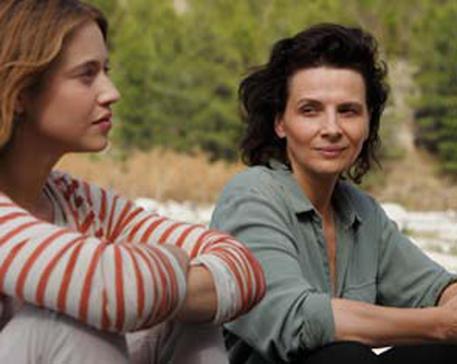
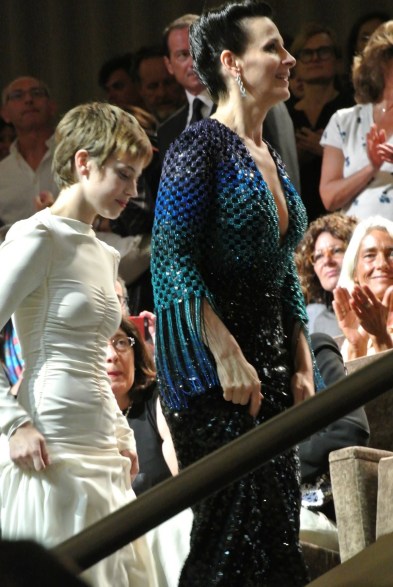
In L’Attesa, Binoche plays Anna, a mother in mourning who receives an unexpected guest; Jeanne (Lou de Laâge), Anna’s son’s girlfriend, arrives for the Easter holiday and hasn’t heard the news. She enters the darkened Sicilian villa; mirrors are covered and everybody’s in black. She’s clearly confused and concerned, but she’s told that Anna’s brother has died.
Why the lie? Anna stubbornly keeps up the ruse in a desperate attempt to pretend that it isn’t true. As she assures Jeanne that her son will arrive soon, she can put off the horrifying days the lie ahead, the worst nightmare for any mother. Binoche, though a French actress playing a woman born in France, is, here, a Sicilian Mamma to the core, and her stoic intensity pairs with the film’s, at times, dizzyingly strung-out tone.
Though Sorrentino’s influence is undeniable on Messina’s work, I felt another director’s influence as well, Marco Bellocchio’s. Messina has done an expert job creating a very specifically Italian melodrama reminiscent of L’Ora di Religione and with the cerebral fervor of Bellocchio’s latest, Sangue Del Mio Sangue.
This is the one and only time I have ever revised a movie review, and I did it because I was completely wrong in my criticism of the film’s premise, based on the idea that a young woman could be unaware of her boyfriend’s death. In the age of Twitter, Instagram, and Facebook and how could be possible?
Wouldn’t she have found out that he was dead from 500 mournful posts by her friends on Facebook?
“The story was set in 2006”, Messina reminded me. And though there technically was a Facebook, very few people were on it, mostly students from select American colleges and university. I’d forgotten how much technology has changed in the past 10 years; Twitter was born in 2006, Instagram in 2010. This sad, dark story of a mother who wants to hold to her son for just a little bit longer is much more realistic than I’d originally believed.
“Wow!”, I told Messina. “You’re smart!”
“I know, he said, smiling, and this kind of smarts and confidence will go a long way for the young filmmaker with the obviously brilliant career ahead of him.
 I Love Italian Everything