
The novel is hot; let’s see about the movie.
A few days ago in Crema, Italy Luca Guadagnino began filming Call Me By Your Name, a new film based on the best-seller by André Aciman. Guadagnino, James Ivory (A Room With A View), and Walter Fasano (I Am Love) have written the screenplay, and Guadagnino has assembled an international cast: Armie Hammer (The Lone Ranger), Timothée Chalamet and Michael Stuhlbarg.
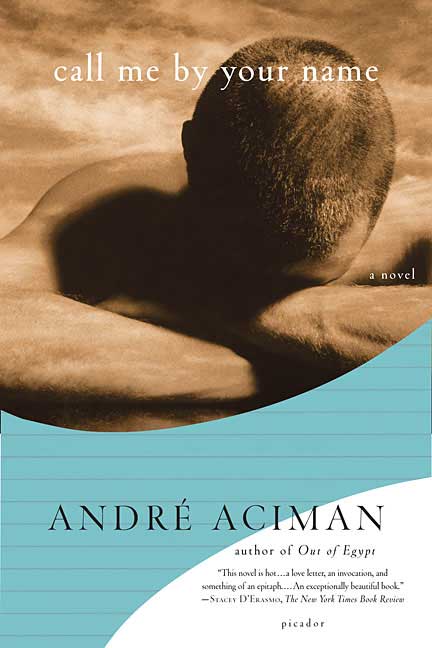
From the New York Times Book Review:
This novel is hot. A coming-of-age story, a coming-out story, a Proustian meditation on time and desire, a love letter, an invocation and something of an epitaph, “Call Me by Your Name” is also an open question. It is an exceptionally beautiful book that cannot quite bring itself to draw the inevitable conclusion about axis-shifting passion that men and women of the world might like to think they will always reach — that that obscure object of desire is, by definition, ungraspable, indeterminate and already lost at exactly the moment you rush so fervently to hold him or her. The heat is in the longing, the unavailability as we like to say, the gap, the illusion, etc. But what André Aciman considers, elegantly and with no small amount of unbridled skin-to-skin contact, is that maybe the heat of eros isn’t only in the friction of memory and anticipation. Maybe it’s also in the getting. In a first novel that abounds in moments of emotional and physical abandon, this may be the most wanton of his moves: his narrative, brazenly, refuses to stay closed. It is as much a story of paradise found as it is of paradise lost.
The literal story is a tale of adolescent sexual awakening, set in the very well-appointed home of an academic, on the Italian Riviera, in the mid-1980s. Elio, the precocious 17-year-old son of the esteemed and open-minded scholar and his wife, falls fast and hard for Oliver, a 24-year-old postdoc teaching at Columbia, who has come to the mansion for six weeks to revise his manuscript — on Heraclitus, since this is a novel about time and love — before publication. Elio is smart, nervous, naïve, but also bold; Oliver is handsome, seductive and breezily American, given to phrases like “Later,” and abundantly “O.K. with” many things Elio is less O.K. with — O.K. with being Jewish, “with his body, with his looks, with his antic backhand, with his choice of books, music, films, friends.” From the first page, we know we’re in the crumbling terrain of memory. “I shut my eyes, say the word, and I’m back in Italy,” Elio writes from some later vantage point. Which is also, of course, to say: I am not in Italy now, I am not that young man, what I am going to describe is long over. Heraclitus, indeed.
 I Love Italian Everything