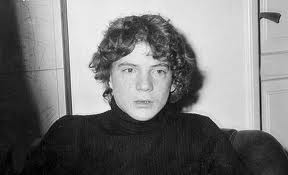
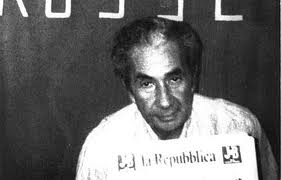
The 70s and 80s were a tumultuous time for Italy with terrorist groups from the left and right murdering and kidnapping in record numbers. The child kidnapping in Io “Non Ho Paura” was based on the true story of a Milanese child that was taken and held in southern Italy. The most famous kidnappings were that of Aldo Moro by the Red Brigades ( watch Buongiorno Notte if you are interested in knowing more ) and of John Paul Getty III, who was kidnapped in Rome in 1971. When his wealthy family refused to negotiate with the terrorists the kidnappers cut off his ear and sent it to his mother. These years became known as “Gli Anni di Piombo” – the years of lead – after the amount of bullets that flew.
The movie “Non Ho Paura” was based on a book by Niccolò Ammaniti. Below are parts of an article by Wendell Rickets about the story and the book.
I’m Not Scared:The Film
by Wendell Ricketts
“Things belong to whoever finds them first.”
Those words come early in Io non ho paura (I’m Not Scared), Niccolò Ammaniti’s vivid and suspenseful novel of the unraveling of childhood, but it isn’t until the end of the story that the terrible promise embedded in that declaration of ownership is revealed.
Ammaniti’s Viareggio prize-winning novel, set during Italy’s anni di piombo (the terrorism- and kidnapping-riddled 1970s) in the fictional deep-southern town of Acqua Traverse, struck a definite chord with Italians, selling a nearly unprecedented 700,000 copies since its publication in 2001. The film version by Oscar-winning Italian director, Gabriele Salvatores, has proved an equal success: Two days after Io non ho paura appeared at the Berlin Film Festival in February 2003, thirty-two countries had purchased the film; the reviews since then have been raves, virtually without exception. I’m Not Scared opened in San Francisco on April 23, 2004 at the Embarcadero Center Cinema.
In a 2003 interview for Rome’s L’Unita, Ammaniti recalled that the genesis of Io non ho paura was a road trip he took to Puglia in the late 1990s: “After Caserta, leaving the Apennines behind, you come upon a hinterland that, during the summer months, is completely covered in wheat. There are no trees, there’s no shade, there’s nothing there, just waves of wheat. It’s a surreal place.
“Looking at these vast, empty expanses with only a few houses scattered around, I imagined what life must have been like for the families who lived there twenty years ago. I asked myself what the children who lived there would have done when school was out for the summer. And that’s how the story was born…. I liked the idea of the countryside in the summer … a place that, in the imagination of a child … might be populated by monsters both real and imaginary.” True to that vision of a place “populated by monsters both real and imaginary,” Salvatores shot I’m Not Scared in locations in Puglia and Basilicata, with a primary set in the countryside near Melfi (population roughly 16,000), due north of Potenza.
But Io non ho paura has an historical point of departure as well: It is set in 1978, the year in which kidnappings in Italy reached an all-time peak of nearly 600 (including, famously, that of Aldo Moro). That was also the year in which the Italian government froze the financial assets of the families of kidnap victims in a desperate bid to discourage ransom demands. Typically, those chosen for kidnap came from wealthy families in the north and were transported to hiding places in Sardegna and in the forgotten reaches of the mezzogiorno. At the same time, though many of the 1970s kidnappings were politically motivated, a large number were carried out against children, with the frank intention of extorting money from distraught parents.
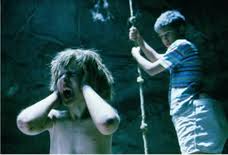
Io non ho paura imagines such a crime, imagining further that the victim is discovered by another child, his age mate, who can scarcely comprehend how the filthy creature he has found, chained at the bottom of a pit behind a house abandoned in the fields, came to be there. What Ammaniti wanted to explore, he said, was precisely that struggle to absorb a horror:
Salvatores, born in Naples in 1950 (though he has lived most of his life in Milan), remains fascinated by the south of Italy, a “magical place,” he says, “that is full of contrasts.” I’m Not Scared is no less so, and the story draws its ultimate equilibrium precisely from the clash of opposites: the idyllic beauty of the countryside vs. the evil that lurks beneath, the world of children vs. the world of adults, acts of selflessness vs. acts of infamy.

